
What's the Difference Between Basic and Streamlined Tax Planning?
What’s the Difference Between Basic and Streamlined Tax Planning?
Tax planning has become one of the most important parts of financial management for both individuals and businesses. Whether you are a salaried employee, freelancer, business owner, or startup founder, proper tax planning can help reduce unnecessary tax liability and improve long-term financial stability.
However, many people believe tax planning simply means filing returns on time or claiming deductions under Section 80C. In reality, there is a major difference between basic tax planning and streamlined tax planning.
Understanding this difference can help taxpayers make smarter financial decisions, improve savings, and avoid costly mistakes.
In this blog, we will explain the complete difference between basic and streamlined tax planning, how both approaches work, and why modern taxpayers are moving toward smarter and more efficient tax strategies.
What is Basic Tax Planning?
Basic tax planning refers to the standard methods people use to remain compliant with tax laws and reduce taxes in a simple way.
Most individuals and small businesses follow basic tax planning without even realizing it.
Common Examples of Basic Tax Planning
- Filing income tax returns on time
- Claiming Section 80C deductions
- Maintaining investment proofs
- Paying advance tax properly
- Keeping financial records organized
- Using standard deductions
The main goal of basic tax planning is:
- Avoiding penalties
- Staying legally compliant
- Reducing taxes through common deductions
While this approach is useful, it usually focuses only on short-term tax savings rather than long-term financial optimization.
What is Streamlined Tax Planning?
Streamlined tax planning is a more advanced and strategic approach to managing taxes.
Instead of only focusing on filing returns, streamlined tax planning focuses on:
- Maximizing legal tax benefits
- Improving overall financial efficiency
- Structuring income intelligently
- Reducing long-term tax burden
This approach combines:
- Tax strategy
- Financial planning
- Investment planning
- Business structuring
- Expense optimization
It is commonly used by:
- High-income professionals
- Business owners
- Startups
- Freelancers
- Investors
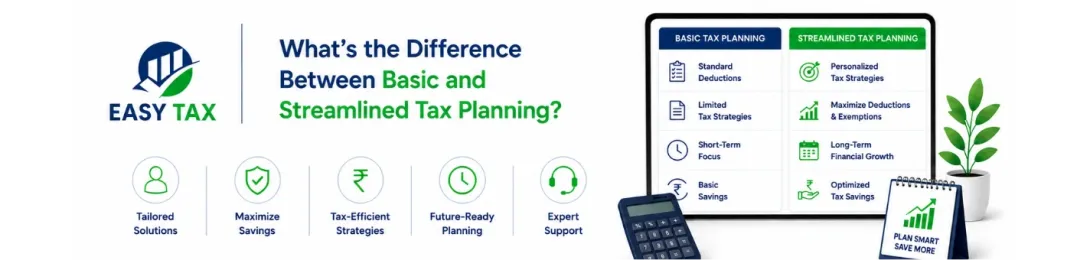
Key Difference Between Basic and Streamlined Tax Planning
Basic Tax Planning
Streamlined Tax Planning
Focuses mainly on compliance
Focuses on long-term tax efficiency
Uses common deductions
Uses advanced tax-saving strategies
Usually reactive
More proactive and strategic
Short-term tax reduction
Long-term financial planning
Limited financial optimization
Complete tax and financial management
Suitable for beginners
Suitable for growing income and businesses
Features of Basic Tax Planning
Basic tax planning is simple and suitable for taxpayers with straightforward income structures.
Main Features:
- Easy to manage
- Minimal professional guidance required
- Focus on standard deductions
- Limited investment planning
- Mostly done during tax filing season
For example, a salaried employee investing in:
- PPF
- ELSS
- LIC
- Tax-saving FD
to claim Section 80C benefits is following basic tax planning.
Features of Streamlined Tax Planning
Streamlined tax planning involves more detailed analysis and financial structuring.
Key Features:
- Strategic income management
- Tax-efficient investments
- Expense optimization
- Business tax planning
- Use of deductions and exemptions intelligently
- Financial forecasting
This approach helps taxpayers legally reduce tax burden while improving overall wealth management.
Efficient Tax Strategies Used in Streamlined Planning
Several advanced techniques are commonly used in streamlined tax planning.
1. Strategic Timing of Income and Expenses
Businesses and professionals may:
- Delay income recognition
- Advance deductible expenses
- Plan investments before financial year-end
This helps improve tax efficiency.
2. Tax-Efficient Investment Planning
Instead of investing only for deductions, streamlined planning focuses on:
- Risk-adjusted returns
- Long-term wealth creation
- Tax-efficient portfolios
This may include:
- Mutual funds
- Retirement planning
- Capital gains strategies
- Debt restructuring
3. Business Structure Optimization
Choosing the right legal structure significantly impacts taxation.
For example:
- Sole Proprietorship
- LLP
- Private Limited Company
all have different tax implications.
Many growing businesses shift toward company structures for better tax efficiency and scalability.
4. Expense Management
Streamlined tax planning ensures proper tracking of:
- Business expenses
- Travel expenses
- Office expenses
- Professional fees
- Depreciation claims
This reduces taxable income legally.
Benefits of Streamlined Tax Planning
Streamlined tax planning provides several long-term advantages.
Better Tax Savings
Strategic planning helps maximize available deductions and exemptions.
Improved Cash Flow
Reducing unnecessary taxes improves business and personal cash flow.
Lower Financial Stress
Proper planning prevents last-minute tax pressure and penalties.
Better Investment Decisions
Tax-efficient financial planning improves wealth creation opportunities.
Stronger Financial Discipline
Maintaining structured records improves overall financial management.
Why Businesses Need Streamlined Tax Planning
As businesses grow, taxation becomes more complex.
Companies must manage:
- GST compliance
- TDS filings
- ROC compliance
- Income tax planning
- Expense deductions
Basic tax planning may not be sufficient for businesses dealing with:
- High revenue
- Multiple clients
- Interstate transactions
- International payments
This is why startups and businesses increasingly use professional tax planning services.
Streamlined Tax Planning for Salaried Employees
Even salaried individuals can benefit from advanced planning.
Some common strategies include:
- Salary restructuring
- HRA optimization
- Tax-efficient investments
- Capital gains planning
- Health insurance deductions
- Retirement planning
With proper guidance, salaried professionals can improve both savings and long-term wealth.
Common Mistakes People Make in Tax Planning
Many taxpayers make avoidable mistakes that increase their tax burden.
Common Errors:
- Investing only at financial year-end
- Ignoring tax-efficient investments
- Poor expense tracking
- Missing deductions
- Filing returns at the last minute
- Not seeking professional guidance
These mistakes often result in higher taxes and financial stress.
Importance of Professional Tax Guidance
Tax laws change regularly, making professional guidance increasingly important.
A qualified tax professional can help with:
- Tax-saving strategies
- Compliance management
- Financial structuring
- Investment planning
- Business taxation
- GST and ITR filing
Professional support helps taxpayers remain compliant while maximizing legal tax benefits.
Basic vs Streamlined Tax Planning: Which is Better?
The right approach depends on:
- Income level
- Financial goals
- Business size
- Investment complexity
Basic Tax Planning is suitable for:
- Beginners
- Small salaried taxpayers
- Individuals with simple income sources
Streamlined Tax Planning is better for:
- Business owners
- Freelancers
- High-income professionals
- Investors
- Growing startups
As income and financial complexity increase, streamlined planning usually becomes more beneficial.
Final Thoughts
Understanding the difference between basic and streamlined tax planning is extremely important for anyone looking to improve financial efficiency and reduce unnecessary tax liability.
Basic tax planning helps taxpayers stay compliant and claim standard deductions, but streamlined tax planning goes much further by creating long-term financial and tax-saving strategies.
Whether you are an individual taxpayer, freelancer, or business owner, smarter tax planning can improve:
- Savings
- Cash fl
- Financial stability
- Investment growth
- Overall wealth management
With proper planning and professional guidance, taxpayers can legally reduce taxes while building a stronger financial future.
EasyTax • Jaipur
Startup Registration & Compliance
Get DPIIT recognition, seed fund compliance & complete business registration handled by CA specialists.