

Thousands of Indians are now running successful businesses directly from home.
From Instagram stores and handmade products to freelancing and online services, home-based businesses are growing rapidly across India.
But one question creates confusion for many small business owners:
“Do home-based businesses need GST registration in India?”
The answer depends on:
- Your annual turnover
- The type of products or services you sell
- Whether you sell online
- Your business structure
This guide explains GST rules for home-based businesses in simple language so beginners can understand everything clearly.
What Is a Home-Based Business?
A home-based business is any business operated from residential premises instead of a commercial office or shop.
Examples include:
- Instagram sellers
- Homemade food businesses
- Freelancers
- Online tutors
- Graphic designers
- Handmade product sellers
- YouTubers and creators
- Resellers
- Online boutiques
Even though these businesses operate from home, GST rules may still apply.
Is GST Mandatory for Home-Based Businesses?
Not always.
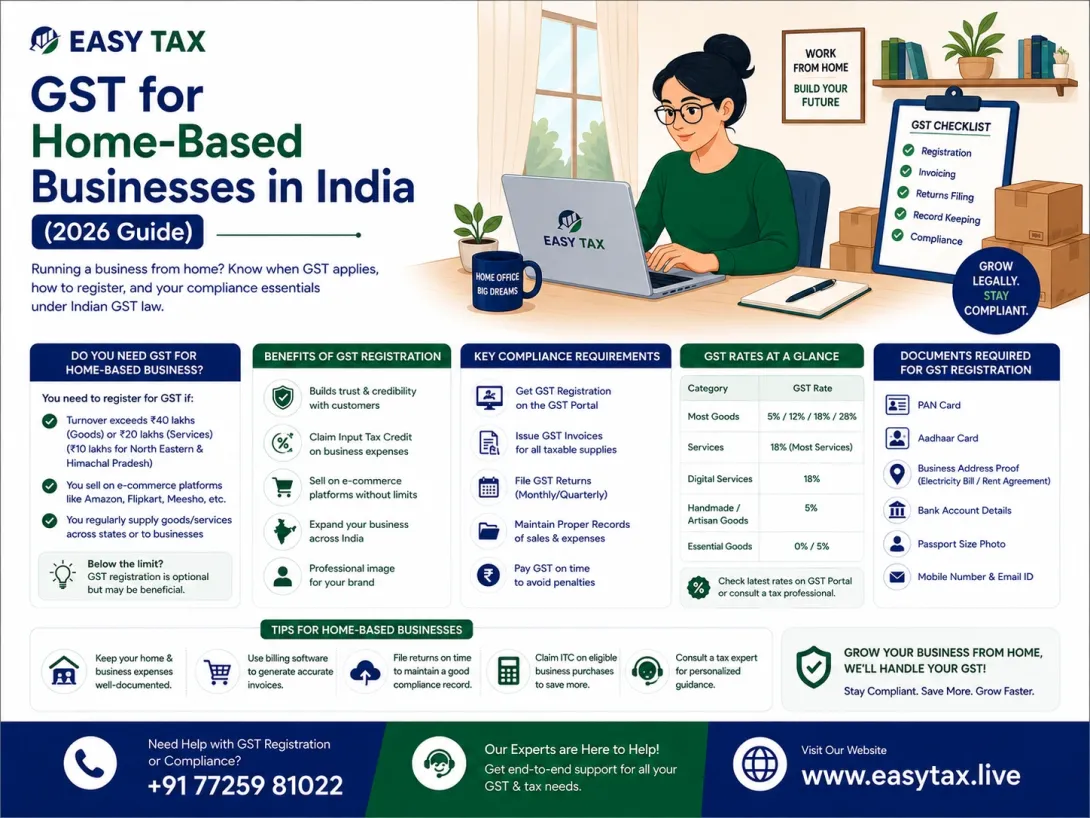
GST registration usually becomes mandatory if your annual turnover exceeds:
- ₹40 lakh for goods (in many states)
- ₹20 lakh for services
However, there are exceptions.
GST May Be Required Earlier If You:
- Sell through online marketplaces
- Operate interstate businesses
- Provide taxable online services
- Need business credibility for clients
Do Instagram and Online Sellers Need GST?
Many small sellers on:
- Amazon
- Flipkart
- Meesho
- Shopify
often assume GST is only for large companies.
That is not true.
In many cases, online sellers may require GST registration even with smaller turnover levels depending on platform and transaction structure.
Example
Priya runs a handmade jewellery business from home through Instagram and ships products across India.
As her orders increased, payment gateways and online logistics platforms started requesting GST details.
Registering for GST helped her:
- Expand professionally
- Work with suppliers easily
- Avoid future compliance issues
Benefits of GST Registration for Home Businesses
Many small businesses voluntarily register for GST because it offers long-term advantages.
- Improves business credibility
- Helps work with larger clients
- Allows smoother online selling
- Reduces future compliance risks
- Helps claim input tax credit
Common GST Mistakes Small Home Businesses Make
1. Ignoring GST Completely
Many people assume small online businesses are invisible to tax systems.
Digital payments and marketplaces now create transaction records automatically.
2. Mixing Personal and Business Transactions
Using personal bank accounts for business creates accounting confusion.
3. Not Maintaining Invoices
Even small businesses should maintain:
- Invoices
- Payment records
- Expense proofs
- Order details
4. Missing GST Return Filing
Once registered, GST returns must be filed regularly even if business activity is low.
Can Freelancers Working From Home Need GST?
Yes.
Freelancers providing:
- Web development
- SEO services
- Content writing
- Digital marketing
- Graphic design
may also require GST registration depending on turnover and client location.
Documents Required for GST Registration
Home-based businesses usually need:
- PAN card
- Aadhaar card
- Bank details
- Photograph
- Business address proof
In many cases, home address can be used as the business address.
How to Stay GST Compliant
- Track annual turnover regularly
- Maintain proper invoices
- Separate personal and business finances
- File GST returns on time
- Consult professionals when scaling business
Proper compliance helps avoid:
- GST notices
- Penalties
- Marketplace restrictions
- Payment issues
Final Thoughts
Running a business from home is easier than ever in India.
But as digital businesses grow, tax compliance also becomes important.
GST rules may look confusing initially, but understanding them early can help your business grow smoothly without future legal or financial problems.
Whether you sell products online, freelance from home, or run a social media business, proper GST planning can help you build a stronger and more professional business.
FAQs
Do home-based businesses need GST registration?
It depends on turnover, business type, and whether you sell online or interstate.
Can I use my home address for GST registration?
Yes, many home businesses use residential addresses as business addresses.
Do Instagram sellers need GST?
In many cases yes, especially when selling through online platforms or crossing turnover limits.
Is GST required for freelancers working from home?
It may become applicable depending on annual turnover and service type.
What happens if I ignore GST compliance?
Non-compliance may lead to notices, penalties, and business restrictions later.
Need Help With GST Registration?
Starting a home-based business or confused about GST compliance?
Get expert GST registration and filing support from EasyTax.live and grow your business confidently.
