

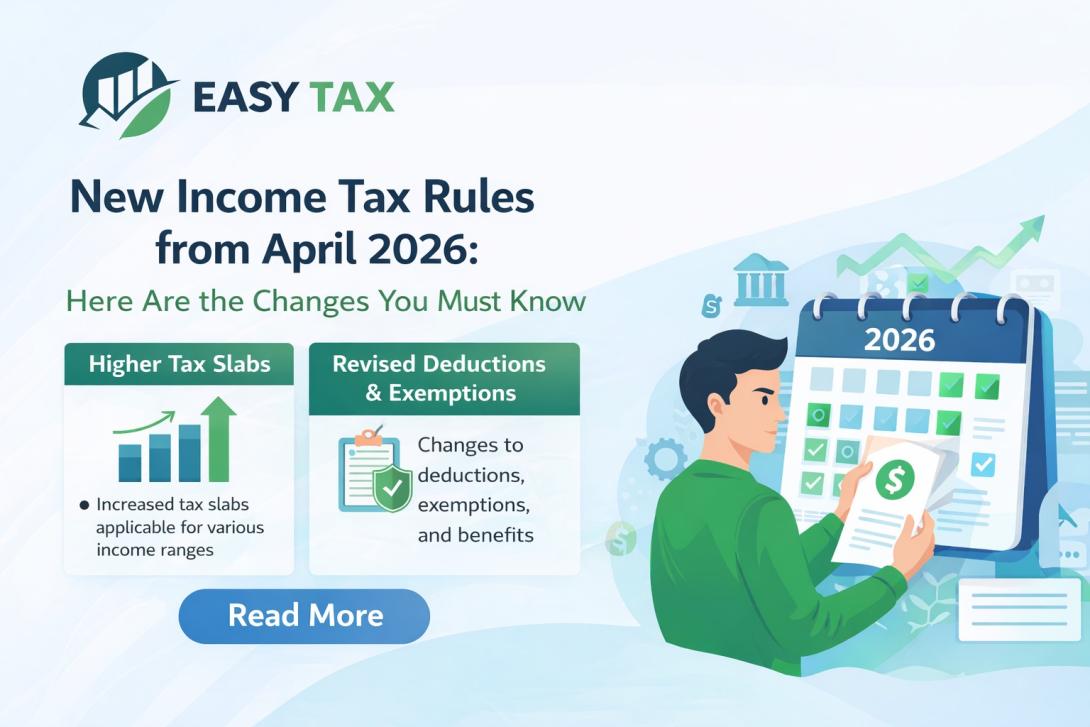
India's income tax rules are changing from April 2026 — and if you earn a salary, freelance, or run a business, these updates are worth knowing. A little awareness now saves a lot of panic later.
Let us have a look at the major changes in a simplistic manner.
1. Ongoing Emphasis on the New Tax Regime.
The government is still trying to advance the New Tax Regime as the default regime. This means more taxpayers may automatically fall under it unless they choose otherwise.
The new regime offers:
- Lower tax rates
- Fewer deductions and exemptions
- A simpler filing process
You have the option to use the Old Tax Regime, but you will need to do so manually, should you wish to claim deductions such as HRA, 80C, or home loan interest.
2. Updated Income Tax Slabs
Income Tax Slabs may undergo minor changes starting April 2026 to ease the tax burden on the middle-income groups.
Though the specific numbers may change depending on the definitive announcements, the concept is:
- Reduced tax on individuals with earnings up to a specific point
- More savings for salaried individuals
- Better tax distribution across income groups
It’s important to compare both regimes before filing your return.
3. Changes in Tax Rebate (Section 87A)
The Tax Rebate under Section 87A is expected to remain an important benefit for small taxpayers.
This rebate helps reduce your tax liability if your income falls within a specific limit. With the new updates:
- More people may become eligible
- The rebate amount could be adjusted
- It may further support low-income earners
This is especially useful for individuals trying to save more from their annual income.
4. Simplified Filing Process
The government is striving to ensure that tax filing becomes easier and faster.
As of April 2026, you will have:
- More pre-filled data in ITR forms
- Faster processing of returns
- Improved online systems
This means less manual work and fewer chances of errors while filing your taxes.
5. Better Tracking of High-Value Transactions
Tax authorities are increasing their focus on transparency. High-value transactions such as:
- Large bank deposits
- Property purchases
- Stock market investments
will be tracked more closely.
It does not imply an increase in taxes, but it will make sure that everything is reported properly. It is always preferable to keep good records and not hide income.
6. Updates in Self-Assessment Tax
Self-Assessment Tax rules are also expected to become clearer and more structured.
Taxpayers will need to:
- Calculate pending tax correctly before filing
- Pay any remaining amount in advance
- Avoid penalties due to late payments
This step is important for freelancers and business owners who do not have TDS deducted regularly.
7. Encouragement for Digital Transactions
The government continues to promote digital payments and financial transparency.
You may see:
- More benefits for digital transactions
- Reduced limits for cash transactions
- Better tracking of online income
This belongs to a greater scheme of establishing a more open and responsible tax system.
8. Pay attention to Compliance and Accuracy.
Stricter compliance is one of the largest changes.
From April 2026:
- Mismatched income details may trigger notices
- Late filings could attract higher penalties
- Accuracy in reporting income will be more important than ever
Therefore, make sure you have your information correctly entered in your return.
Final Thoughts
The new rules in April 2026 of the new income tax are designed to streamline the system but make it more transparent. The push towards the New Tax Regime, better tracking, and easier filing are all steps in that direction.
