

Supply chain management has become one of the most important business functions in India today. From local kirana stores to large e-commerce companies, businesses now depend on faster logistics, better inventory systems, and efficient transportation networks to serve customers on time.
The evolution of supply chain management in India started with basic transportation and warehousing systems. Over the years, globalization, digital technology, GST implementation, and online commerce completely changed how businesses manage inventory, suppliers, warehouses, and deliveries.
Modern SCM (Supply Chain Management) is the process of coordinating sourcing, production, storage, and delivery efficiently using:
- Automation
- Artificial Intelligence
- Cloud Software
- Real-Time Tracking
- Predictive Analytics
In this guide, you will understand what supply chain management means, how supply chains evolved in India, major supply chain trends in 2026, common challenges businesses face, and what the future of logistics and SCM looks like in India.
What Is Supply Chain Management?
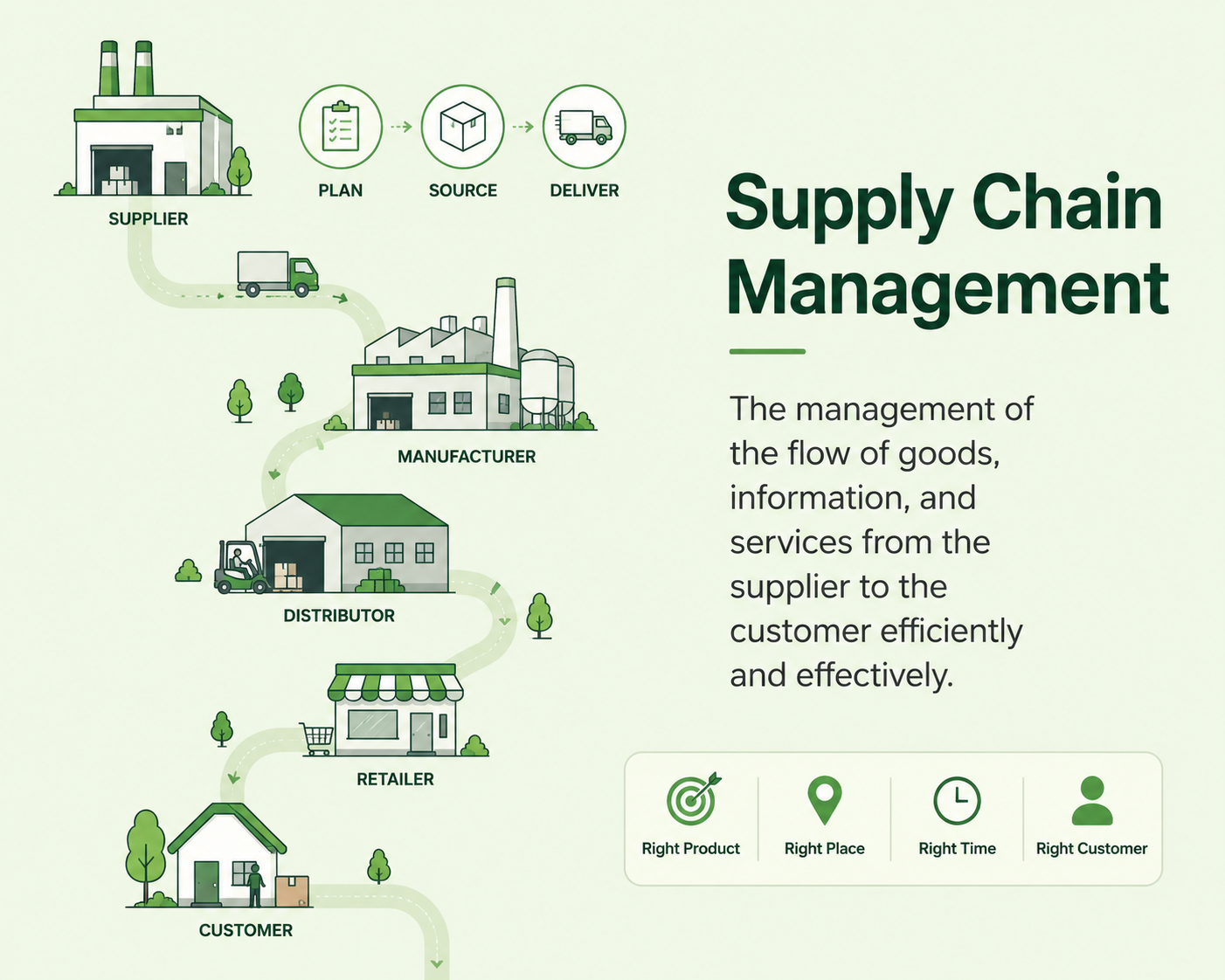
Supply chain management is the process of managing the flow of goods, inventory, services, and information from suppliers to customers.
Supply chain management helps businesses ensure products are manufactured, stored, transported, and delivered efficiently while controlling costs and improving customer satisfaction.
A Supply Chain Generally Includes:
- Suppliers
- Manufacturers
- Warehouses
- Transport Companies
- Retailers
- End Customers
For example, when you order a smartphone online in Mumbai, the product may move from a factory in Chennai to a warehouse in Delhi before reaching your doorstep through a logistics partner.
Basic Supply Chain Flow
| Stage | Function | Example |
|---|---|---|
| Supplier | Raw Materials | Steel Supplier |
| Manufacturer | Product Creation | Mobile Factory |
| Warehouse | Storage | Fulfillment Center |
| Logistics | Transportation | Delivery Trucks |
| Retailer | Product Selling | Online Marketplace |
Modern businesses now use software systems to monitor every stage in real time.
How Did Supply Chain Management Evolve in India?
Supply chain management in India evolved from manual logistics systems into technology-driven digital networks.
The Indian logistics sector earlier depended heavily on fragmented transport systems, paperwork, delayed deliveries, and local warehousing. Over time, globalization and technology transformed operations significantly.
Major Stages of Supply Chain Evolution in India
| Phase | Key Developments |
|---|---|
| Traditional Supply Chains (Before 1990) | Manual inventory management, local transport systems, limited warehouse infrastructure, slow communication |
| Liberalization Era (1991–2005) | Growth of imports and exports, expansion of manufacturing, increased foreign investment, rise of organized retail |
| Digital Transformation Era (2005–2020) | ERP software adoption, e-commerce growth, GPS tracking systems, automated warehouses |
| Smart Supply Chain Era (2020–2026) | AI-based forecasting, cloud-based SCM software, real-time logistics tracking, robotics and automation |
For example, companies in Bengaluru now use AI systems to predict customer demand and manage inventory automatically.
What Are the Latest Supply Chain Trends in India in 2026?
The latest supply chain trends in India focus on automation, sustainability, real-time visibility, and digital transformation.
Indian businesses are investing heavily in smart logistics and warehouse technologies to reduce operational costs and improve delivery speed.
Top Supply Chain Trends in India
| Trend | Purpose | Business Benefit |
|---|---|---|
| AI & Automation | Demand Forecasting | Reduced Inventory Losses |
| Real-Time Tracking | Shipment Visibility | Faster Deliveries |
| E-Commerce Logistics | Online Order Management | Better Customer Experience |
| Green Supply Chains | Sustainable Operations | Lower Environmental Impact |
| Warehouse Automation | Robotics & Scanners | Faster Processing |
How Did GST Change Supply Chain Management in India?
GST simplified interstate logistics and reduced supply chain inefficiencies across India.
Before GST (Goods and Services Tax), businesses faced multiple state-level taxes and checkpoints that slowed transportation and increased logistics costs.
Major GST Impact on Supply Chains
- Faster Interstate Movement
- Reduced Warehouse Duplication
- Lower Logistics Delays
- Better Inventory Planning
- Centralised Distribution Systems
Companies can now operate centralised fulfilment centres more efficiently after GST reforms.
What Challenges Does Supply Chain Management Face in India?
Supply chain management in India still faces infrastructure, technology, and operational challenges.
Common Supply Chain Challenges in India
- Poor Infrastructure: Road quality and transport bottlenecks affect logistics.
- High Fuel Costs: Increasing fuel prices impact transportation expenses.
- Inventory Mismanagement: Many businesses still use manual systems.
- Demand Forecasting Errors: Incorrect predictions create shortages or excess stock.
- Skilled Workforce Gap: Automation requires trained professionals.
How Is Technology Transforming Supply Chains in India?
Technology is transforming supply chains by improving visibility, automation, and operational efficiency.
Technologies Changing Supply Chains
| Technology | Usage | Example |
|---|---|---|
| AI | Demand Prediction | Smart Inventory Planning |
| IoT | Real-Time Monitoring | GPS Vehicle Tracking |
| Blockchain | Secure Transactions | Supply Verification |
| Cloud SCM Software | Centralized Management | Multi-Location Inventory |
| Robotics | Warehouse Automation | Automated Sorting |
What Is the Future of Supply Chain Management in India?
The future of supply chain management in India will focus on automation, sustainability, faster deliveries, and predictive analytics.
Future Supply Chain Outlook
- Increased Warehouse Automation
- Growth of Electric Logistics Fleets
- Expansion of Quick Commerce Delivery
- AI-Based Inventory Optimization
- Stronger Rural Logistics Infrastructure
Businesses adopting digital supply chain systems early are likely to reduce operational costs and improve customer experience significantly.
Conclusion
Supply chain management in India has evolved from manual transport and warehousing systems into highly technology-driven digital networks.
Businesses now depend heavily on automation, AI, analytics, and real-time logistics systems to remain competitive.
As India’s manufacturing, e-commerce, and logistics sectors continue growing, businesses that modernize their supply chains early are more likely to improve operational efficiency and customer satisfaction.
Staying updated with the latest SCM developments can help businesses adapt faster in 2026 and beyond.