

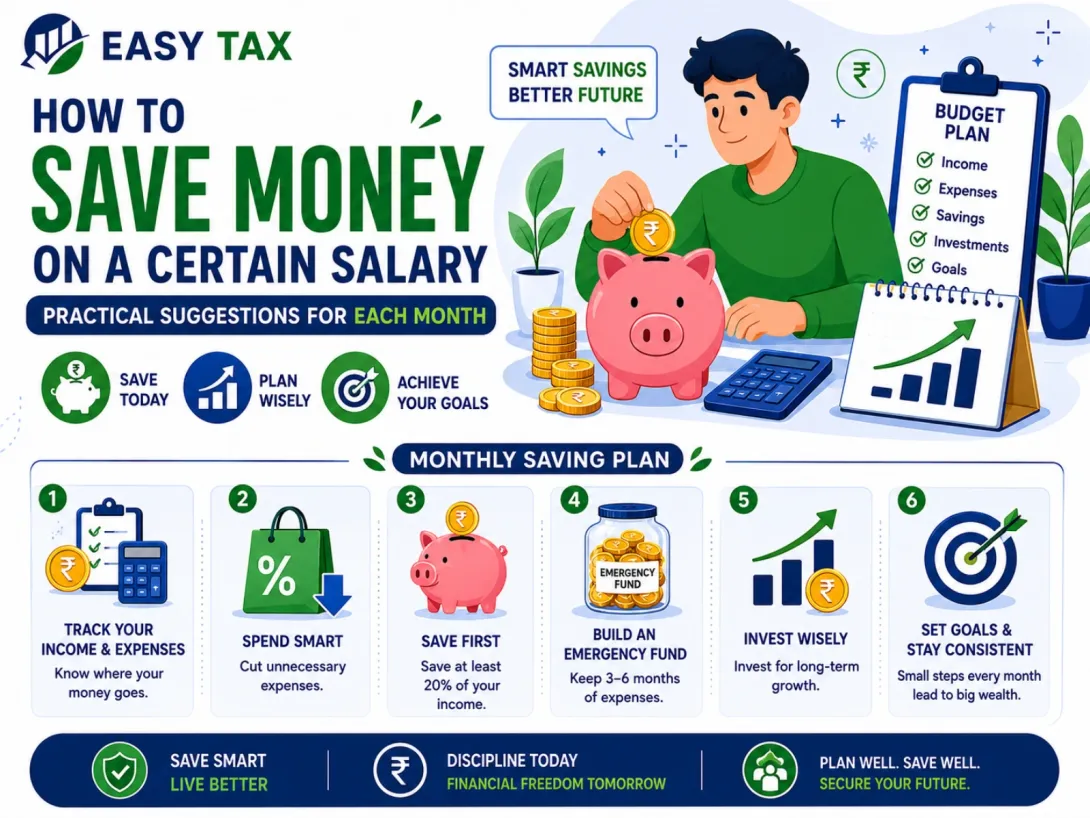
How to Save Money from Salary: Practical Monthly Strategies for Financial Stability (2026 Guide)
Managing money on a fixed salary can be challenging, especially when expenses continue to rise every month. However, with the right financial planning strategies, it is possible to save consistently without affecting your lifestyle.
Saving money is not about earning more—it is about managing income wisely, reducing unnecessary expenses, and making smart financial decisions.
In this guide, we will explore 10 practical monthly saving strategies that every salaried employee should follow to achieve financial stability and long-term wealth creation.
1. Create a Realistic Monthly Budget
A proper budget is the foundation of financial success. It helps you understand where your money is going and how much you can save.
A simple method is the 50/30/20 rule:
- 50% → Needs (rent, groceries, bills)
- 30% → Wants (lifestyle, shopping, entertainment)
- 20% → Savings and investments
Tracking expenses regularly ensures better control over your finances.
2. Reduce Unnecessary Expenses
Small expenses can add up significantly over time.
Try to reduce:
- Unused subscriptions
- Impulse shopping
- Frequent dining out
- Expensive entertainment habits
Cooking at home and planning purchases can help save a significant portion of your salary.
3. Negotiate and Reduce Fixed Costs
Many people ignore the possibility of reducing fixed monthly expenses.
You can save money by:
- Negotiating rent (if possible)
- Switching to cheaper internet plans
- Comparing insurance premiums
- Reducing electricity usage
Even small savings in fixed costs create long-term financial benefits.
4. Use Employee Benefits Effectively
Many employees do not fully utilize company-provided benefits.
These may include:
- Health insurance
- Food allowances
- Travel reimbursements
- Retirement contribution plans
Using these benefits properly can reduce personal expenses significantly.
5. Plan Taxes Strategically
Tax planning is an important part of salary savings.
By using proper tax-saving instruments like:
- PPF (Public Provident Fund)
- ELSS Mutual Funds
- NPS (National Pension System)
you can legally reduce your taxable income and increase savings.
Professional tax guidance can also help optimize your tax structure efficiently.
6. Build an Emergency Fund
An emergency fund protects you from unexpected financial situations such as:
- Medical emergencies
- Job loss
- Sudden expenses
Ideally, you should save 3 to 6 months of living expenses in a separate savings account for financial security.
7. Automate Your Savings
One of the most effective saving habits is automation.
Set up automatic transfers from your salary account to:
- Savings account
- Mutual funds
- Fixed deposits
This ensures that saving becomes a priority before spending begins.
8. Start Smart Investments
Savings alone are not enough; money must grow through investments.
You can consider:
- Mutual funds
- Fixed deposits
- Stocks (based on risk tolerance)
- SIP (Systematic Investment Plans)
Smart investing helps beat inflation and build long-term wealth.
9. Avoid High-Interest Debt
High-interest debt like credit card balances can destroy your savings.
To manage debt:
- Pay credit card bills on time
- Avoid unnecessary loans
- Consolidate loans if required
- Use EMI options wisely
Being debt-free helps improve financial stability quickly.
10. Set Clear Financial Goals
Financial discipline improves when you have clear goals.
Examples include:
- Buying a house
- Retirement planning
- Emergency fund creation
- Travel or lifestyle goals
Clear goals motivate consistent saving and long-term planning.
Conclusion
Saving money from a fixed salary is not difficult if you follow the right financial habits. By budgeting wisely, reducing expenses, planning taxes, and investing consistently, you can build strong financial stability over time.
The key is discipline and consistency. Small savings every month can lead to significant wealth in the future.
With proper financial planning and expert guidance, you can achieve both short-term stability and long-term financial freedom.
