

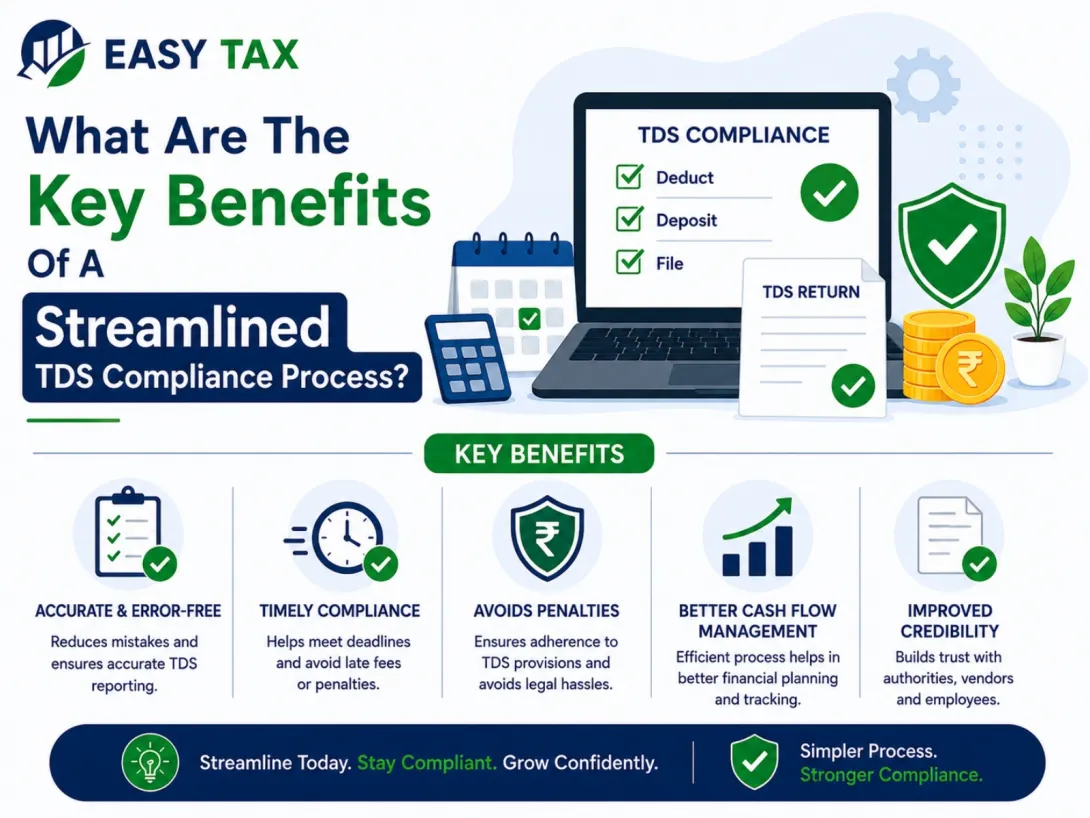
What Are the Key Benefits of a Streamlined TDS Compliance Process? (2026 Complete Guide)
Tax Deducted at Source (TDS) is one of the most important compliance requirements for businesses, employers, professionals, startups, and organizations operating in India. TDS ensures that taxes are collected at the source of income and deposited with the government on time.
However, managing TDS compliance can be challenging. Businesses often struggle with calculating deductions, meeting filing deadlines, reconciling records, generating certificates, and responding to compliance notices. Even small mistakes can lead to penalties, interest charges, and legal complications.
As tax systems become increasingly digital and automated in 2026, businesses are moving toward streamlined TDS compliance processes to improve accuracy, save time, and reduce compliance risks.
In this guide, we will explain the key benefits of streamlined TDS compliance, common challenges businesses face, and how professional support can simplify the entire process.
What Is TDS Compliance?
TDS compliance refers to the process of:
- Deducting tax at the applicable rate
- Depositing TDS with the government
- Filing TDS returns
- Issuing TDS certificates
- Maintaining proper records
- Meeting statutory deadlines
TDS applies to various payments, including:
- Salaries
- Professional fees
- Contractor payments
- Rent payments
- Interest payments
- Commission payments
Businesses must ensure that all TDS-related activities are completed accurately and on time.
Why TDS Compliance Is More Important in 2026
The Income Tax Department increasingly uses:
- AI-based monitoring systems
- Automated data matching
- Digital compliance verification
- Real-time reporting systems
These technologies help identify:
- Late TDS deposits
- Filing discrepancies
- Incorrect deductions
- Missing returns
- Mismatched records
As compliance monitoring becomes more sophisticated, businesses need efficient systems to manage TDS obligations.
What Is a Streamlined TDS Compliance Process?
A streamlined TDS compliance process uses organized procedures, technology, and professional expertise to simplify TDS management.
Instead of relying on manual calculations and scattered records, businesses implement structured systems that ensure:
- Accurate deductions
- Timely deposits
- Automated reminders
- Error-free return filing
- Better record management
The goal is to reduce compliance risks while improving operational efficiency.
Key Benefits of a Streamlined TDS Compliance Process
1. Saves Significant Time
Manual TDS management often requires substantial administrative effort.
Businesses must:
- Calculate deductions
- Track due dates
- Prepare returns
- Maintain records
- Generate certificates
A streamlined process automates many of these tasks, allowing businesses to focus on growth and operations.
Benefits
- Faster processing
- Reduced administrative workload
- Improved productivity
2. Reduces Filing Errors
Errors in TDS compliance are among the most common causes of notices and penalties.
Common mistakes include:
- Incorrect PAN details
- Wrong deduction rates
- Calculation errors
- Filing incorrect returns
A streamlined system improves accuracy and minimizes mistakes.
Benefits
- Fewer compliance issues
- Reduced notices
- Better reporting accuracy
3. Ensures Timely Compliance
Missing TDS deadlines can result in:
- Interest charges
- Late filing fees
- Penalties
- Compliance notices
A structured compliance process helps businesses track all important due dates.
Benefits
- Timely deposits
- Timely return filing
- Reduced financial penalties
4. Improves Financial Control
TDS is directly linked to cash flow management.
Businesses that monitor TDS obligations effectively gain better control over:
- Tax liabilities
- Vendor payments
- Payroll management
- Financial reporting
Benefits
- Improved budgeting
- Better cash flow forecasting
- Stronger financial discipline
5. Enhances Record Management
Maintaining organized TDS records is essential during:
- Tax audits
- Assessments
- Compliance reviews
A streamlined process ensures that all documents are properly stored and accessible.
Important Records Include
- Challans
- TDS returns
- Payment records
- TDS certificates
- Deduction calculations
Benefits
- Easy document retrieval
- Better audit readiness
- Reduced compliance risks
6. Simplifies TDS Return Filing
Preparing quarterly TDS returns manually can be complicated.
A streamlined process simplifies:
- Data collection
- Validation
- Reconciliation
- Return preparation
Benefits
- Faster return filing
- Reduced workload
- Improved compliance accuracy
7. Better Vendor and Employee Relationships
TDS compliance affects both employees and vendors.
Delayed or incorrect TDS certificates can create problems for recipients during their own tax filings.
Benefits
- Timely certificate issuance
- Improved transparency
- Better professional relationships
8. Supports Business Growth
As businesses grow, TDS obligations become more complex.
Growing organizations often deal with:
- More employees
- Additional vendors
- Multiple locations
- Higher transaction volumes
A streamlined process ensures compliance remains manageable during expansion.
Benefits
- Scalability
- Consistent compliance
- Reduced operational complexity
9. Reduces Risk of Tax Notices
Incorrect TDS compliance can trigger notices from tax authorities.
Common triggers include:
- Return mismatches
- Missing deposits
- Incorrect PAN reporting
- Delayed filings
A streamlined process helps identify and resolve issues before filing.
Benefits
- Lower notice risk
- Better compliance confidence
- Reduced legal complications
10. Improves Audit Preparedness
Businesses may face:
- Internal audits
- Tax audits
- Compliance reviews
Maintaining organized TDS records simplifies audit procedures.
Benefits
- Faster audit response
- Accurate documentation
- Reduced stress during audits
Common Challenges Businesses Face in TDS Compliance
Many organizations struggle with:
Complex Regulations
TDS provisions vary depending on payment type and recipient category.
Frequent Rule Changes
Tax regulations are updated regularly, making compliance challenging.
High Transaction Volumes
Large businesses process hundreds of TDS-related transactions monthly.
Manual Processes
Manual calculations increase the likelihood of errors.
Resource Constraints
Small businesses often lack dedicated compliance teams.
A streamlined approach helps overcome these challenges effectively.
Role of Technology in Modern TDS Compliance
Technology plays a major role in improving compliance efficiency.
Modern solutions provide:
- Automated calculations
- Due date reminders
- Data validation
- Record management
- Compliance tracking
Businesses increasingly adopt digital systems to simplify tax management.
Benefits of Outsourcing TDS Compliance
Many organizations choose to outsource TDS compliance to professionals.
Advantages include:
Access to Expertise
Professional consultants understand complex tax regulations and compliance requirements.
Reduced Administrative Burden
Businesses can focus on operations while experts handle compliance tasks.
Improved Accuracy
Experienced professionals reduce filing errors and compliance risks.
Cost Efficiency
Outsourcing is often more affordable than maintaining a dedicated in-house compliance team.
Who Needs Professional TDS Compliance Services?
Professional TDS support benefits:
- Startups
- MSMEs
- Private Limited Companies
- LLPs
- Partnership Firms
- Ecommerce Businesses
- Consultants
- Agencies
- Manufacturers
Any business making TDS-applicable payments should maintain proper compliance systems.
Why Choose Easy Tax for TDS Compliance?
Easy Tax provides complete TDS compliance solutions designed to simplify tax management for modern businesses.
Our Services Include
- TDS Calculation
- TDS Return Filing
- TDS Certificate Generation
- Compliance Monitoring
- Tax Advisory
- Payroll Tax Support
- Notice Assistance
Why Businesses Trust Easy Tax
- Experienced tax professionals
- Accurate compliance management
- Affordable pricing
- Fast online support
- Timely filing assistance
- Secure document handling
We help businesses stay compliant while reducing administrative stress.
Frequently Asked Questions (FAQs)
What is TDS compliance?
TDS compliance involves deducting tax, depositing it with the government, filing returns, and maintaining proper records.
Why is TDS compliance important?
It helps businesses comply with tax laws and avoid penalties, interest, and notices.
What happens if TDS is filed late?
Late filing may result in fees, interest charges, and compliance notices.
Can TDS compliance be automated?
Yes. Many businesses use software and professional services to automate calculations, filing, and compliance tracking.
Is outsourcing TDS compliance beneficial?
Yes. Outsourcing improves accuracy, reduces workload, and ensures timely compliance.
Can Easy Tax help with TDS filing?
Yes. Easy Tax provides end-to-end TDS compliance and filing support for businesses across India.
Final Thoughts
TDS compliance is a critical responsibility for businesses of all sizes. While managing TDS manually can be time-consuming and error-prone, a streamlined compliance process offers significant advantages, including better accuracy, improved efficiency, reduced penalties, stronger financial control, and easier audit preparedness.
As tax compliance becomes increasingly digital in 2026, businesses that adopt organized and efficient TDS management systems will be better positioned to remain compliant and focus on growth.
Easy Tax helps businesses simplify TDS compliance through professional support, accurate filing, and reliable tax advisory services. With the right processes and expert guidance, businesses can manage TDS obligations confidently and efficiently.
