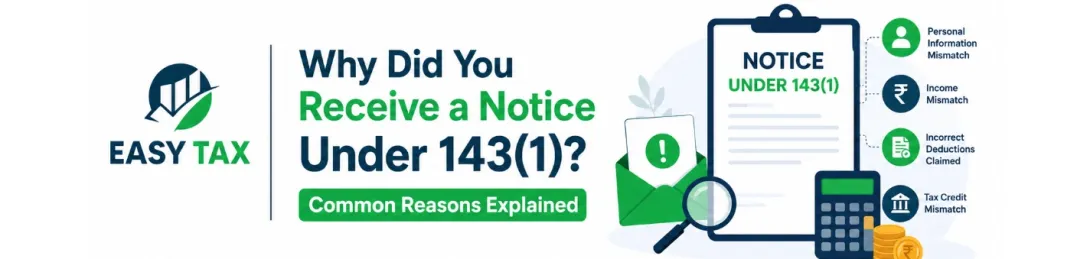
Why Did You Receive a Notice Under 143(1)? Common Reasons Explained
Essential Aspects of Tax
A Section 143(1) notice is one of the most common income tax intimations taxpayers receive after filing an ITR. Most are routine communications — not cause for alarm. This guide explains what it means, why you received it. And exactly what action to take. This process directly involves Tax Compliance. This process directly involves Tax Compliance. This process directly involves Tax Compliance. This process directly involves Tax Compliance. A Section 143(1) notice is an automated intimation sent after the Income Tax Department processes your ITR. The department electronically compares your filed return with records from employers, banks, mutual funds. And stockbrokers. This is a preliminary assessment — not detailed scrutiny under Section 143(2). The notice is automatically generated after your filed return is matched against government tax records. The department may issue it because: The Income Tax Department cross-checks your return with AIS, Form 26AS, TIS, bank interest reports. And employer filings. If differences are detected, adjustments may be made automatically. A TDS mismatch notice happens when the TDS claimed in your return does not match department records. TDS is verified through Form 26AS and employer filings. If incorrect TDS is claimed, the department may reduce your refund or generate a demand. This means the Income Tax Department believes additional tax is payable. The department recalculates tax liability and raises a demand when the processed return differs from your filed return. Important: Always verify the demand before making payment — many notices are generated due to data mismatches, not genuine underpayment. The notice is available on the official income tax portal under "View Filed Returns" or "e-Proceedings". The PDF is password-protected. The password format is: Carefully compare the notice with your original ITR, AIS, Form 26AS, salary slips, deduction proofs. And bank interest entries before taking any action. Most Section 143(1) notices are caused by avoidable filing mistakes. Taxpayers often file returns quickly without reconciling AIS, TDS, or bank income. A Section 143(1) notice is usually a routine communication sent after your ITR is processed. In many cases, it simply confirms refund status or highlights small mismatches in tax records. The most important step is reviewing the notice carefully instead of panicking. Always compare the notice with your AIS, Form 26AS, salary records. And deduction proofs before taking action. EasyTax — ITR Filing & Tax Notice Support Across IndiaWhat is a Section 143(1) Notice?
Why Did You Receive a Section 143(1) Notice?
Most Common Reasons for a Section 143(1) Notice
Essential Aspects of Tax Compliance
Reason What It Means Common Example TDS Mismatch Claimed TDS differs from records Employer filed wrong TDS Unreported Income Income missing in ITR FD interest not reported Deduction Mismatch Wrong deduction claim Incorrect Section 80C claim Tax Calculation Error Incorrect computation Wrong slab calculation AIS Mismatch AIS data differs from ITR Mutual fund income missing What is a TDS Mismatch Notice?
What Does "ITR Processed with Demand" Mean?
# Reason 1 TDS mismatch with Form 26AS 2 Incorrect tax calculation in filed return 3 Unreported bank or FD interest 4 Invalid or excess deduction claim 5 Advance tax mismatch 6 Income difference flagged in AIS How to Check a Section 143(1) Notice Online
Essential Aspects of Tax Compliance
What Should You Do After Receiving the Notice?
Situation Action Required No Demand, No Refund No action needed — ITR accepted as filed Refund Issued Verify refund amount matches your calculation Tax Demand Raised Verify the mismatch before paying Incorrect Adjustment File rectification request under Section 154 TDS Mismatch Reconcile with Form 26AS and employer records Common ITR Filing Mistakes to Avoid
Essential Aspects of Tax Compliance
Mistake Risk Ignoring AIS before filing Income mismatch and adjustment notice Claiming incorrect TDS amount Reduced refund or demand raised Forgetting FD or bank interest Unreported income flagged in AIS Wrong or excess deduction claims Deduction disallowed, tax demand Using incorrect bank details Refund failure or delay Filing without verification Return treated as not filed Frequently Asked Questions
Is a Section 143(1) notice serious?
Why did I receive an income tax notice after filing my return?
Can I ignore a Section 143(1) notice?
How do I respond to a Section 143(1) notice?
What is AIS mismatch in ITR?
Does Section 143(1) mean scrutiny?
Conclusion
For more detailed assistance, explore our professional tax services or check official updates on the Income Tax Department website.
EasyTax • Jaipur
Expert Assisted ITR Filing
Dedicated CA prepares, verifies, and files your ITR. Maximum refund, accurate deductions, zero notices.