

Introduction
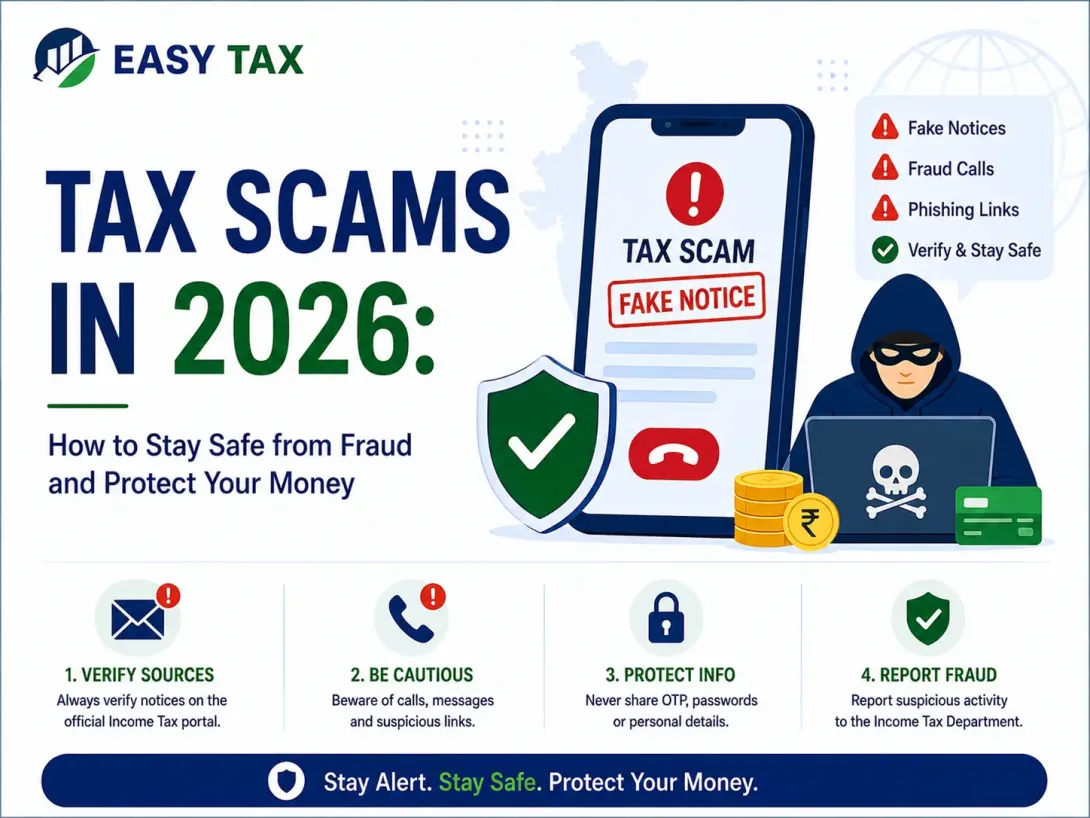
With increasing digitalization and online tax filing, cybercriminals are constantly finding new ways to target taxpayers. Fake emails, fraudulent calls, phishing messages, and identity theft have become more sophisticated in 2026.
Scammers often exploit people's fear of penalties, tax refunds, or compliance requirements to steal sensitive information such as PAN, Aadhaar numbers, bank account details, and OTPs.
Whether you are a salaried employee, business owner, freelancer, or investor, understanding the latest tax scams and knowing how to identify them can help protect your hard-earned money and personal information.
What Are Tax Scams?
Tax scams are fraudulent activities designed to deceive taxpayers into sharing sensitive information or transferring money by pretending to represent government authorities, tax consultants, or financial institutions.
The main objective of scammers is to:
- Steal money.
- Obtain personal information.
- Commit identity theft.
- Gain access to bank accounts.
- File fraudulent income tax returns.
- Misuse PAN and Aadhaar details.
Tax fraudsters often create panic by threatening legal action or promising attractive tax refunds.
Why Do Scammers Target Taxpayers?
Tax-related fraud has increased because:
Taxpayers Trust Government Communication
People tend to respond quickly to messages claiming to be from the Income Tax Department.
Fear and Urgency Work
Scammers create fear by saying:
- Your PAN will be blocked.
- You will receive a penalty.
- Legal action will be initiated.
- Bank accounts may be frozen.
Tax Season Creates Opportunities
During ITR filing season, millions of taxpayers receive genuine tax communications. Fraudsters exploit this period to send fake notices and phishing links.
Valuable Personal Data
Information like PAN, Aadhaar, bank account details, and passwords can be sold or misused for financial fraud.
Most Common Tax Scams in 2026
Cybercriminals are constantly changing their tactics. Here are some of the most common tax scams affecting Indian taxpayers in 2026.
Fake Income Tax Notices
Scammers send emails or WhatsApp messages pretending to be from the Income Tax Department.
The notice may state:
- Outstanding tax demand.
- Refund verification pending.
- PAN suspension warning.
- Penalty for non-compliance.
These messages usually contain fake links that steal login credentials or banking information.
Example: Rahul receives an email claiming that ₹25,000 is pending against his PAN and immediate payment is required. The email contains a suspicious link directing him to a fake website resembling the Income Tax portal.
Safety Tip: Always verify notices through the official Income Tax e-filing portal before taking any action.
Phishing Emails and SMS
Phishing attacks remain one of the biggest threats in 2026.
Fraudsters send:
- Emails.
- SMS messages.
- Telegram links.
- QR codes.
These messages often claim:
- Refund approved.
- ITR verification failed.
- PAN update required.
Clicking such links may install malware or steal confidential information.
Example: A taxpayer receives an SMS saying: "Your tax refund of ₹18,500 has been approved. Click here to receive payment." The link leads to a fake website designed to collect bank details.
Warning Sign: Government departments do not ask for passwords, OTPs, or bank PINs through emails or messages.
Fake Tax Refund Offers
Many fraudsters attract taxpayers by promising quick refunds.
Common claims include:
- Double refund benefits.
- Immediate refund processing.
- Faster refund approval.
Victims are asked to:
- Pay processing charges.
- Share bank details.
- Enter OTPs.
Example: An individual receives a call stating that a refund of ₹30,000 is ready but a "processing fee" of ₹999 must be paid first. Once the payment is made, the scammer disappears.
Fraudulent Calls Claiming to Be from the Income Tax Department
Scammers often impersonate tax officers.
They may threaten:
- Arrest warrants.
- PAN cancellation.
- Property seizure.
- Immediate penalties.
Victims are pressured into making instant payments.
Reality: The Income Tax Department does not demand payment over phone calls or ask taxpayers to transfer money through UPI or gift cards.
Safety Tip: Disconnect the call and verify any communication through official channels.
PAN and Aadhaar Linking Scams
Since PAN-Aadhaar linking is mandatory, fraudsters use this requirement to target taxpayers.
Fake messages may state:
- PAN will become inactive.
- Aadhaar verification failed.
- Link immediately to avoid penalty.
These messages contain fake websites designed to collect personal data.
Example: A person receives a WhatsApp message saying: "Your PAN will be blocked within 24 hours. Click here to complete Aadhaar linking." The website steals PAN, Aadhaar, and bank details.
WhatsApp and Social Media Tax Frauds
Scammers increasingly use:
- WhatsApp.
- Facebook.
- Instagram.
- Telegram.
- X (Twitter).
They create fake pages and impersonate:
- Chartered Accountants.
- Income Tax officials.
- Financial advisors.
These fraudsters may promise:
- Guaranteed refunds.
- Special tax-saving schemes.
- Fast ITR filing.
Warning Sign: Unverified accounts requesting payments or confidential information should be treated with suspicion.
Identity Theft and Unauthorized ITR Filing
Identity theft has become a major concern.
Fraudsters may misuse:
- PAN details.
- Aadhaar information.
- Mobile numbers.
- Email IDs.
They can file fake returns to claim refunds or commit financial fraud.
Example: A taxpayer discovers that an ITR has already been filed using their PAN without their knowledge. In such cases, one must take steps to discard the return and report it immediately to the Income Tax Department and cybercrime authorities.
Real-Life Scam Scenario
Priya receives an email claiming to be from the Income Tax Department. It states that she is eligible for a refund of ₹42,000.
The email asks her to:
- Click a link.
- Verify bank details.
- Enter an OTP.
Fortunately, Priya notices the suspicious email address and verifies her refund status directly through the Income Tax portal, avoiding financial loss.
As technology evolves, scammers are becoming more sophisticated. Awareness remains the first line of defense against tax fraud. Understanding how these scams work can help taxpayers stay vigilant and protect their money and sensitive information.
Warning Signs of a Tax Scam
Fraudsters often rely on fear and urgency to trick taxpayers. Recognizing the warning signs can help you avoid becoming a victim.
Urgent Demands for Payment
Scammers frequently create panic by claiming:
- Outstanding tax dues.
- Immediate penalties.
- Frozen bank accounts.
- Pending legal proceedings.
They pressure taxpayers into making instant payments without verification.
Red Flag: Government departments usually provide sufficient time and follow a formal process before initiating action.
Threats of Arrest or Penalties
Fraudsters often use intimidating language such as:
- "You will be arrested."
- "A warrant has been issued."
- "Your PAN will be blocked."
- "Your account will be frozen."
Reality: The Income Tax Department does not threaten taxpayers over phone calls, WhatsApp messages, or emails demanding instant payments.
Requests for OTPs, Passwords, or Bank Details
One of the biggest warning signs is when someone asks for:
- OTPs.
- Debit card details.
- Internet banking passwords.
- UPI PIN.
- CVV numbers.
Important: No government authority or genuine tax consultant will ever ask for these confidential details.
Suspicious Links and Attachments
Scammers often send links through:
- Emails.
- SMS.
- WhatsApp.
- Telegram.
Clicking these links may:
- Install malware.
- Redirect to fake websites.
- Steal passwords and financial information.
Unofficial Email IDs and Phone Numbers
Be cautious if communications come from:
- Gmail addresses.
- Yahoo mail IDs.
- Unknown mobile numbers.
Always verify notices and emails through official government portals.
How to Stay Safe from Tax Fraud
Being proactive is the best defense against tax scams.
Verify Notices on the Income Tax Portal
Before responding to any notice:
- Visit the official Income Tax e-filing portal.
- Check the "Pending Actions" section.
- Verify whether the notice actually exists.
Never trust links received through random messages.
Avoid Sharing Sensitive Information
Never share:
- PAN details unnecessarily.
- Aadhaar number.
- Bank account credentials.
- Passwords.
- OTPs.
These details can be misused for identity theft.
Use Only Trusted Websites
Always access:
- Income Tax e-Filing Portal.
- NSDL website.
- Official bank websites.
Avoid clicking links received through emails or WhatsApp.
Enable Two-Factor Authentication
Two-factor authentication adds an extra layer of protection to:
- Email accounts.
- Banking applications.
- Income Tax e-filing accounts.
This reduces the risk of unauthorized access.
Keep PAN and Aadhaar Details Secure
Avoid:
- Uploading sensitive documents on social media.
- Sharing photographs of PAN cards.
- Sending Aadhaar copies to unknown individuals.
File Returns Through Trusted Professionals
Use:
- Registered Chartered Accountants.
- Reputed tax consultants.
- Authorized tax filing platforms.
This minimizes the chances of fraud.
What to Do If You Become a Victim of a Tax Scam
Quick action can reduce financial damage.
Contact Your Bank Immediately
If you have shared financial information:
- Block cards.
- Freeze suspicious transactions.
- Inform your bank immediately.
Change Passwords
Update passwords for:
- Email accounts.
- Income Tax portal.
- Internet banking.
- UPI applications.
Use strong passwords and avoid using the same password everywhere.
Report the Incident to the Income Tax Department
If someone misuses your PAN or files a fake return, inform the department immediately through official channels.
File a Cybercrime Complaint
Report fraud through:
- National Cyber Crime Reporting Portal.
- Local cybercrime police station.
Preserve:
- Screenshots.
- Emails.
- Phone numbers.
- Transaction details.
Monitor Financial Accounts
Keep checking:
- Bank statements.
- Credit card transactions.
- Income Tax portal activity.
- Email alerts.
Early detection can prevent further damage.
Latest Tax Scam Trends in 2026
Cybercriminals are adopting more advanced techniques in 2026.
AI-Generated Phishing Messages
Fraudsters are using artificial intelligence to create realistic:
- Emails.
- Voice calls.
- Text messages.
These messages closely resemble genuine government communication.
Deepfake Voice Scams
Scammers impersonate:
- Tax officers.
- Bank executives.
- Financial advisors.
Using AI-generated voices, they try to gain trust and obtain sensitive information.
QR Code Payment Frauds
Victims are tricked into scanning QR codes supposedly for:
- Refund verification.
- Tax payments.
- PAN linking.
Scanning malicious QR codes can result in unauthorized transactions.
Fake Mobile Apps
Fraudsters launch counterfeit apps resembling:
- Income Tax Portal.
- Banking applications.
These apps collect passwords and financial data.
Social Media Investment and Tax Refund Scams
Fake influencers and pages promise:
- Guaranteed tax refunds.
- Tax-saving schemes.
- Investment opportunities.
These schemes often end in financial loss.
Tax Fraud Prevention Tips for Individuals
Verify Every Communication
Always cross-check notices through official sources.
Avoid Clicking Unknown Links
Open government websites manually instead of using links from messages.
Keep Software Updated
Regular updates improve device security.
Use Strong Passwords
Create unique passwords and change them periodically.
Stay Informed
Awareness about new fraud techniques is one of the best defenses.
Tax Fraud Prevention Tips for Businesses
Businesses are increasingly targeted by cybercriminals. If you need help managing your records correctly, Read this blog.
Train Employees
Educate staff about:
- Phishing attacks.
- Fake invoices.
- Fraudulent emails.
Implement Internal Controls
Maintain:
- Segregation of duties.
- Payment approvals.
- Multi-level verification.
Monitor Financial Transactions
Regular audits can help detect suspicious activities.
Protect Sensitive Data
Secure:
- PAN details.
- GST records.
- Customer information.
- Financial databases.
Practical Examples
Example 1: Fake Refund Message
A taxpayer receives a WhatsApp message claiming a refund of ₹25,000.
The message requests:
- Bank account number.
- OTP verification.
The taxpayer ignores the message and checks the Income Tax portal, where no refund is pending. Potential loss avoided.
Example 2: Fraudulent Phone Call
A scammer claiming to be an Income Tax officer threatens legal action for unpaid taxes. Instead of making payment, the taxpayer disconnects the call and confirms that no tax demand exists.
Example 3: PAN Identity Theft
An individual discovers that an ITR has been filed without authorization. By immediately reporting the matter and changing credentials, further misuse is prevented.
Staying informed and following simple safety practices can significantly reduce the risk of becoming a victim of tax scams. Awareness, verification, and prompt action remain the strongest tools against cyber fraud.
Need Help with Tax Filing and Advisory Services?
Protecting yourself from tax scams begins with using trusted tax professionals and secure filing processes.
Our Services Include
| Income Tax Return Filing | Tax Planning and Advisory |
| Notice Response Assistance | PAN and Aadhaar Services |
| TDS Compliance & Form 16 vs Form 16A | Capital Gains Tax Advisory |
| Business Tax Compliance | Filing e-Form 15CA and 15CB |
Expert CA Consultation
Why Choose Us?
- Experienced Chartered Accountants.
- Secure and Transparent Processes.
- Professional Tax Advisory.
- Prompt Notice Response.
- Complete Compliance Support.
Stay safe and file your taxes with confidence through trusted tax experts. Contact us today.
Conclusion
Tax scams in 2026 are becoming increasingly sophisticated, with fraudsters using fake notices, phishing emails, AI-generated calls, and identity theft techniques to target taxpayers.
The best defense is awareness. Verifying communications, protecting sensitive information, using trusted websites, and acting quickly when suspicious activities occur can prevent financial losses.
Whether you are an individual taxpayer or a business owner, staying informed and practicing cyber hygiene can help protect your money and personal information from evolving tax fraud schemes.
Frequently Asked Questions (FAQs)
What are tax scams in 2026?
Tax scams in 2026 are fraudulent schemes designed to steal money or sensitive information from taxpayers by impersonating the Income Tax Department, tax consultants, or financial institutions.
How do I know if a tax notice is genuine?
You can verify notices through the official Income Tax e-Filing portal under the "Pending Actions" section. Never trust links received through emails, SMS, or WhatsApp without verification.
Can scammers misuse my PAN details?
Yes. PAN details can be misused for identity theft, fake ITR filings, and financial fraud. Always keep your PAN information secure.
What should I do if I receive a fake tax call?
Do not share any information or make payments. Disconnect the call and verify your tax status through the official Income Tax portal.
Is it safe to share OTPs with tax officials?
No. Genuine government authorities never ask for OTPs, passwords, UPI PINs, or bank credentials.
What are phishing tax scams?
Phishing scams involve fake emails, SMS, or websites that mimic official portals to steal personal and financial information.
Can identity theft affect my ITR filing?
Yes. Fraudsters can misuse stolen PAN and Aadhaar details to file unauthorized tax returns and claim refunds.
How can businesses protect themselves from tax fraud?
Businesses should implement strong internal controls, employee awareness programs, two-factor authentication, and regular audits.
How can I report tax fraud in India?
You can report cyber fraud through:
- National Cyber Crime Reporting Portal.
- Local Cyber Crime Police Station.
- Income Tax Department's official channels.
Can fake refund messages steal money?
Yes. Fraudsters often promise refunds and ask for processing fees, OTPs, or banking information to steal funds.
What should I do if I accidentally clicked a phishing link?
Immediately:
- Change passwords.
- Contact your bank.
- Enable two-factor authentication.
- Report the incident to cybercrime authorities.
