

GST Compliance for Small Businesses: Registration, Returns & ITC
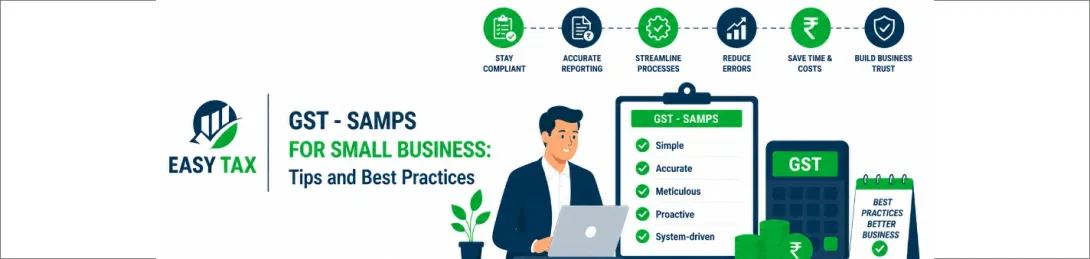
GST Compliance for Small Businesses: Registration, Returns, ITC and Best Practices
Goods and Services Tax (GST) compliance is an important responsibility for many small businesses in India. It involves understanding whether registration is required, issuing the correct documents, reporting transactions, paying applicable tax and maintaining supporting records.
The exact obligations depend on the nature of the business, its aggregate turnover, the states in which it operates, the type of supplies it makes and any applicable exemptions or special schemes. This guide explains the main compliance areas and highlights where businesses should verify their individual position.
01 Understanding GST and why compliance matters
GST is an indirect tax system that applies to supplies of goods and services under the relevant central, state and integrated GST laws. Depending on the transaction, tax may be charged as CGST and SGST (or UTGST) on an intra-State supply, or as IGST on an inter-State supply.
A registered business may have responsibilities such as issuing prescribed invoices, reporting outward supplies, filing applicable returns, paying tax and maintaining accounts. Businesses should not assume that every transaction has the same tax treatment.
Why accurate GST records matter
- They help support the figures reported in GST returns.
- They make sales and purchase reconciliation easier.
- They help identify differences between books and portal data.
- They support an eligible Input Tax Credit claim.
- They help a business respond to departmental communications.
- They provide a clearer picture of tax liabilities and cash flow.
02 GST registration for small businesses in India
GST registration gives a business a GST Identification Number (GSTIN) and brings it within the applicable compliance framework. Registration is mandatory when the business becomes liable under the CGST Act, the relevant State or Union Territory GST law, and applicable notifications.
Turnover thresholds are not identical for every business
Section 22 of the CGST Act provides the general registration threshold framework. The statutory framework includes a general threshold of ₹20 lakh and a lower threshold of ₹10 lakh for specified special-category States, with provisions allowing notified changes. A higher threshold, up to ₹40 lakh, may apply to eligible suppliers engaged exclusively in supplying goods, subject to State adoption and specified conditions.
These figures should not be treated as a single universal rule. The applicable threshold depends on the State or Union Territory, the nature of supplies, the type of business and the relevant notifications. Businesses supplying services should not assume that the higher exclusive-goods threshold applies to them.
Aggregate turnover is generally calculated on an all-India, PAN-based basis and includes the categories of supplies specified under the GST law. It is not necessarily the same as the sales figure shown for a single shop or branch.
Other situations that may require registration
Section 24 identifies categories of persons who may be required to register even when the ordinary Section 22 threshold has not been crossed. These include specified inter-State suppliers, casual taxable persons, non-resident taxable persons, certain persons liable under reverse charge, specified agents and electronic-commerce-related categories.
However, the Act also permits exemptions for notified categories. For example, certain small suppliers making specified supplies through electronic-commerce operators may be covered by an exemption subject to conditions. Some inter-State service suppliers may also qualify for notified relief.
Voluntary GST registration
A person who is not otherwise liable may apply for voluntary registration under the GST framework. Once registered, the person generally becomes responsible for the compliance obligations applicable to registered taxpayers.
Voluntary registration may be considered where a business has substantial business-to-business customers, eligible input tax credit to evaluate, or commercial reasons for obtaining a GSTIN. It should not be treated as an automatic way to obtain a tax benefit. Registration also brings return-filing, invoicing and record-keeping responsibilities.
03 How a small business should check GST registration liability
Before applying, a business should establish its facts rather than relying on turnover alone. A practical preliminary review can follow these steps:
- Identify the business and PAN: Confirm the legal entity, PAN and the States or Union Territories from which supplies are made.
- Calculate aggregate turnover: Review the relevant all-India turnover, including the categories required by the GST law.
- Classify the supplies: Identify whether the business supplies goods, services, or both, and whether any supplies are exempt, nil-rated or otherwise treated differently.
- Check compulsory-registration categories: Review Section 24 and the notifications that exempt specified persons or transactions from registration.
- Check State-specific rules: Verify the applicable threshold and State GST requirements.
- Consider the scheme: Compare the regular scheme with the composition option, if the business appears eligible.
- Record the conclusion: Keep the turnover working, supply classification and legal references supporting the registration decision.
When should an eligible person apply?
Under Section 25 of the CGST Act, a person liable for registration under Section 22 or Section 24 is generally required to apply within 30 days from the date on which the liability arises. Casual taxable persons and non-resident taxable persons have a separate advance-application requirement.
The precise application process and documents should be checked on the official GST Portal. Requirements can depend on the legal constitution of the applicant, business address, authorised signatory and authentication method.
Official portal: GST Portal .
04 GST returns and filing responsibilities
A registered taxpayer must identify the returns and statements applicable to its registration type and filing frequency. The return obligations are not identical for every GST registration.
GSTR-1
GSTR-1 is used to report details of outward supplies. Depending on the taxpayer's category and applicable filing option, it may be filed monthly or quarterly. Businesses should reconcile the reported invoice data with their sales register before submission.
GSTR-3B
GSTR-3B is a summary return used to report applicable tax liabilities, eligible input tax credit, adjustments and payment details. Taxpayers should review the auto-populated information and compare it with their books and supporting documents before filing.
The GST Portal states that a normal taxpayer must file GSTR-3B for each applicable tax period, including a nil return where the conditions for nil filing are satisfied. A nil return should not be selected merely because the business made no sales; purchases, system-populated data, outstanding interest or late fee can affect whether nil filing is available.
GSTR-9 and other returns
GSTR-9 is an annual return for categories of registered persons to whom the annual-return requirement applies. Exemptions and applicability conditions may be notified for particular classes or financial years. Do not assume that every small business must file GSTR-9.
Other forms or statements may apply depending on whether the taxpayer is under a special scheme, deducts or collects tax, makes specified supplies or has another registration category. Check the return dashboard for the forms applicable to the particular GSTIN and period.
How to prepare before filing
- Download or organise the sales register for the period.
- Check invoices, credit notes and debit notes.
- Review purchase invoices and the relevant GSTR-2B information.
- Identify reverse-charge liabilities and other adjustments.
- Reconcile outward supplies with GSTR-1 data.
- Reconcile tax liability and eligible credit before GSTR-3B.
- Review the draft return before payment and filing.
- Save the filed return, ARN and payment records.
The GST Portal's official GSTR-3B filing manual explains the online return workflow, system-populated information and nil-return conditions.
05 GST invoices and business documentation
Registered suppliers must issue the prescribed document for the relevant transaction. Depending on the supply and taxpayer status, that may be a tax invoice, bill of supply, receipt voucher, delivery challan, credit note or debit note.
Common particulars on a tax invoice
Rule 46 of the CGST Rules specifies particulars for a tax invoice. Depending on the transaction and applicable provisions, these include:
- Name, address and GSTIN of the supplier.
- A consecutive invoice number unique for the financial year.
- Date of issue.
- Recipient details, including GSTIN or UIN where applicable.
- HSN code for goods or Accounting Code for services, as applicable.
- Description and quantity of goods, where relevant.
- Value of supply and taxable value.
- Applicable tax rate and tax amount.
- Place of supply and State details for relevant inter-State supplies.
- Other particulars required under the applicable rules.
The recipient's GSTIN is not a universal mandatory field for every sale. Rule 46 distinguishes registered recipients from unregistered recipients and specifies additional recipient details in certain cases involving unregistered recipients.
Practical invoicing controls
- Use a consistent invoice-numbering sequence.
- Check the recipient's legal name and GSTIN where relevant.
- Verify the HSN or SAC classification before applying a rate.
- Show the correct tax components for the transaction.
- Issue credit or debit notes where legally appropriate.
- Retain copies of invoices and supporting documents.
Read the official CBIC invoice rules before finalising invoice formats.
06 Input Tax Credit (ITC): eligibility and reconciliation
Input Tax Credit may allow a registered taxpayer to offset eligible input tax against output tax liability. It is not an automatic credit for every GST amount paid on a purchase.
Key conditions to review
Section 16 of the CGST Act sets out the eligibility conditions. These include possession of a prescribed tax document, receipt of goods or services, communication of the relevant invoice details through the statutory system, payment of tax to the Government subject to the legal framework, and furnishing the applicable return.
Section 17 restricts or apportions credit in specified situations, including business and non-business use, taxable and exempt supplies, and blocked-credit categories.
A business should therefore review the law and rules before claiming credit. A purchase invoice by itself does not establish that the entire tax amount is eligible.
Example: a simplified ITC illustration
Assume a registered business has ₹15,000 of output tax liability and ₹10,000 of input tax credit that has already been verified as eligible and available for use. Ignoring other adjustments and liabilities, the remaining amount would be ₹5,000.
This is only an arithmetic illustration. Actual tax payable may differ because of blocked credits, reversals, reverse-charge liability, credit restrictions, payment rules and other adjustments.
Monthly ITC reconciliation
- Match purchase-register entries with supplier invoices.
- Review the relevant GSTR-2B information.
- Identify missing, duplicated or incorrectly reported invoices.
- Check whether the goods or services were received.
- Review blocked credits and business-use restrictions.
- Track reversals, reclaims and other adjustments.
- Retain the reconciliation and supporting evidence.
Never advertise or assume that every invoice will result in available ITC or that a reconciliation service can guarantee complete matching.
07 E-way bills and movement of goods
An e-way bill is an electronic document used for specified movements of goods under the GST rules. Rule 138 of the CGST Rules contains the general consignment-value framework and related requirements.
The general rule refers to movement of a consignment whose value exceeds ₹50,000 in specified circumstances, including movement in relation to a supply, for reasons other than supply, or due to an inward supply from an unregistered person.
The rule also contains exceptions, special situations and requirements relating to transport details. State-specific notifications may also be relevant for certain intra-State movements.
Before goods are dispatched
- Confirm whether Rule 138 applies to the movement.
- Check the consignment value and applicable exceptions.
- Keep the invoice, bill of supply or delivery challan ready.
- Enter the correct supplier and recipient details.
- Provide the required transport and vehicle information.
- Check the validity period and update details where required.
- Ensure the person in charge of the conveyance has the required documents.
Official reference: CBIC E-way Bill Rules .
08 GST Composition Scheme: who should evaluate it?
The Composition Scheme is an optional simplified tax arrangement for eligible registered persons. It is governed by Section 10 of the CGST Act, the applicable rules and relevant notifications.
The statutory provision contains a base turnover limit and permits the Government to notify an enhanced limit subject to conditions. The applicable notified limit and State-specific position must be checked for the relevant financial year. Do not assume that the same limit applies to every State or every type of business.
Important restrictions
- A composition taxpayer generally cannot collect GST separately from customers.
- A composition taxpayer is generally not entitled to claim input tax credit on purchases.
- Eligibility depends on turnover, the nature of supplies and statutory restrictions.
- Specified inter-State outward supplies and other excluded categories can prevent a person from opting for the scheme.
- A separate provision applies to certain eligible service suppliers, subject to its own conditions.
Regular scheme or composition scheme?
| Factor | Regular scheme | Composition scheme |
|---|---|---|
| Tax calculation | Based on applicable GST provisions and rates. | Based on the notified composition method and rate. |
| Input Tax Credit | Eligible credit may be claimed subject to conditions. | ITC is generally not available. |
| Tax collection | Tax is collected where applicable. | Composition taxpayer generally cannot collect GST separately. |
| Eligibility | Subject to normal registration and compliance provisions. | Subject to specific turnover and activity restrictions. |
| Reporting | Applicable regular returns. | Applicable composition statements and returns. |
The composition option should be evaluated against customer type, purchase credit, sales pattern, supply locations and the scheme's restrictions. A lower nominal tax rate does not automatically make it more beneficial for every business.
Refer to Section 10 of the CGST Act and the applicable notifications before opting in.
09 Maintain proper GST records and reconciliations
Section 35 of the CGST Act requires registered persons to maintain true and correct accounts and records. These include records relating to inward and outward supplies, stock, input tax credit and tax payable or paid.
Records small businesses should organise
- Sales invoices and outward-supply registers.
- Purchase invoices and expense records.
- Credit notes and debit notes.
- Stock and inventory records, where applicable.
- Input Tax Credit workings and reconciliations.
- GSTR-1, GSTR-3B and other applicable return copies.
- Tax payment challans and electronic ledger records.
- E-way bills and transport documents, where applicable.
- GST registration certificates and amendment records.
- Departmental notices, replies and supporting evidence.
Recommended reconciliation routine
Compare the sales register with GSTR-1 and the tax liability reported in GSTR-3B. Compare purchase records with GSTR-2B and review the eligibility of each credit category. Investigate differences instead of simply forcing figures to match.
A documented monthly reconciliation helps identify missing invoices, incorrect tax classifications, duplicate entries and other reporting issues before they accumulate.
10 GST audit and departmental verification
Businesses should distinguish between maintaining records, departmental audit and special audit. These are not the same requirement.
Departmental audit
Section 65 of the CGST Act empowers the authorised tax authorities to conduct an audit of a registered person for a specified period and in the prescribed manner. The provision includes requirements concerning notice, conduct of the audit and communication of findings.
Special audit
Section 66 provides for a special audit in specified circumstances where the statutory conditions are met. It should not be described as an automatic annual audit applicable to every business above a general turnover figure.
Is a CA audit automatically required under the old GST turnover rule?
The former Section 35(5) requirement for a registered person above a prescribed turnover limit to obtain a CA/CMA audit was omitted with effect from 1 August 2021. Do not reproduce that former requirement as a current universal GST audit obligation.
Separate financial-statement, income-tax, company-law or other audit requirements may still apply depending on the entity and its circumstances. Those should be evaluated under their own laws.
11 Late fees, interest and GST notices
Failure to file a required return or statement by its due date can result in late fees and, where applicable, interest or additional consequences under the GST law.
Section 47 of the CGST Act provides the statutory framework for late fees. The amount payable for a particular return can also be affected by applicable notifications, reductions, maximum limits, taxpayer category and the period of delay. Therefore, a single daily amount should not be presented as the universal late fee for every GST return.
Interest is a separate matter governed by the applicable provisions, including Section 50 and relevant rules. Its calculation depends on the nature of the liability and the facts of the case.
If a GST notice or communication is received
- Read the notice and identify the issuing authority.
- Record the reference number, tax period and response deadline.
- Identify the legal provision and issue raised.
- Compare the allegation with returns, books and supporting documents.
- Prepare a factual response with relevant evidence.
- Submit through the prescribed channel and preserve the acknowledgement.
- Seek qualified tax advice where the issue involves material liability or litigation.
Do not ignore a notice or rely on an informal phone conversation as a substitute for a response required through the prescribed portal or procedure.
12 Practical GST compliance checklist for small businesses
The following routine can help a business organise its GST work. The exact filing frequency and tasks must be adjusted to the taxpayer's registration type and applicable law.
During the month
- Record sales and purchase transactions promptly.
- Issue the correct tax invoice or other prescribed document.
- Check GST classification and applicable rates.
- Review e-way bill requirements before applicable goods movements.
- Keep credit notes, debit notes and supporting documents organised.
Before filing returns
- Reconcile the sales register with outward-supply data.
- Review purchase invoices and GSTR-2B information.
- Check eligible ITC and required reversals.
- Review reverse-charge and other tax liabilities.
- Compare GSTR-1 figures with the relevant GSTR-3B disclosures.
- Check the GST Portal for the applicable return due dates.
- Review the draft return before filing and payment.
At regular intervals
- Review aggregate turnover and registration obligations.
- Reassess composition-scheme eligibility if relevant.
- Review business locations and registration amendments.
- Check pending notices and portal communications.
- Back up accounting and GST records.
- Review changes in applicable notifications and rules.
13 Common GST compliance mistakes to avoid
01 Assuming turnover is the only registration test
Registration can depend on compulsory-registration provisions, exemptions and the nature of the supplies. Review the full registration framework rather than relying only on one turnover number.
02 Applying a GST rate based only on a product name
GST classification may depend on the relevant HSN or SAC entry, description, conditions and effective notification. Verify the classification and rate before invoicing.
03 Claiming every purchase invoice as ITC
Credit is subject to statutory conditions, restrictions and documentation. Review GSTR-2B and the relevant provisions before claiming credit.
04 Treating GSTR-1 and GSTR-3B as interchangeable
These forms serve different reporting purposes. Reconcile outward-supply information with summary liabilities and tax payment before filing.
05 Ignoring nil-return obligations
A taxpayer may still have a filing obligation in a period with no sales. Check the portal's applicable return and nil-filing conditions.
06 Opting for composition without comparing restrictions
A business should consider ITC, customer profile, supply locations, eligibility and restrictions before choosing the composition option.
07 Treating every audit as a mandatory CA audit
Departmental audit, special audit and other statutory audits have different legal bases. Identify the actual provision before advising a business.
08 Missing portal notices and due dates
Check the GST Portal and maintain an internal compliance calendar. Do not rely solely on old blog posts or generic due-date lists.
14 When should a small business seek GST professional assistance?
A business may be able to organise routine records internally. However, professional assistance can be useful when registration liability is unclear, a supply has a complex classification, ITC eligibility is disputed, returns contain material differences or a departmental notice requires a reasoned response.
A GST professional can help review the business facts, identify applicable provisions, organise supporting documents and explain the compliance options. The scope of any engagement should be agreed clearly, and no service should be represented as a guarantee against notices, errors or rejection.
Need help with GST compliance?
EasyTax provides GST-related services including registration, return filing and advisory support. Review the service scope and discuss your business requirements before proceeding.
Explore GST Registration Explore GST Return Filing Explore GST Advisory Contact EasyTax
15 Frequently asked questions about GST for small businesses
01 Is GST registration mandatory for every small business?
No. Registration depends on aggregate turnover, the nature and location of supplies, compulsory-registration provisions and applicable exemptions. A business should assess its facts under Sections 22 and 24 of the CGST Act and relevant notifications.
02 Is the GST registration threshold always ₹20 lakh?
No. The threshold framework includes different provisions for specified States and eligible suppliers exclusively dealing in goods. State adoption, supply type and notifications matter. Verify the applicable threshold for the business before relying on a figure.
03 Do all inter-State sellers need GST registration?
Section 24 contains compulsory-registration categories, but notifications provide exemptions for specified persons and transactions. Certain inter-State service suppliers, for example, may qualify for notified relief. The exact supply category and current exemption conditions must be checked.
04 Does every e-commerce seller need GST registration?
Not necessarily in every situation. The GST law contains electronic-commerce-related registration provisions and notifications that exempt specified classes of small suppliers subject to conditions. Check the nature of the supply, operator role and applicable notification.
05 What is the difference between GSTR-1 and GSTR-3B?
GSTR-1 reports applicable outward-supply details. GSTR-3B is a summary return used to declare tax liabilities, eligible ITC and payment details. The figures should be reconciled before filing.
06 Does a business have to file a nil GSTR-3B?
A normal taxpayer generally has to furnish GSTR-3B for each applicable tax period even where there is no business activity. Whether the portal permits a nil return depends on the applicable nil-filing conditions, including system-populated data and outstanding liabilities.
07 Can every GST-registered business claim Input Tax Credit?
No. ITC is subject to Section 16, Section 17, the rules and other applicable conditions. Certain credits are restricted or blocked, and business-use and exempt-supply rules can affect the amount available.
08 Is a buyer's GSTIN compulsory on every invoice?
No. The invoice rules distinguish between registered and unregistered recipients and prescribe different particulars for specified cases. Refer to Rule 46 of the CGST Rules for the applicable invoice requirements.
09 Is an e-way bill required for every goods movement?
No. Rule 138 provides a general consignment-value framework and also includes exceptions and special requirements. Check the type of movement, value, applicable notifications and State rules before dispatch.
10 Can a small business choose the Composition Scheme?
Only if it meets the applicable turnover, supply and other eligibility conditions. Composition taxpayers generally cannot collect GST separately or claim ITC. The scheme should be evaluated against the business's customer and purchase profile.
11 Is a CA audit compulsory for every business above a GST turnover limit?
No. The former Section 35(5) GST audit requirement by a CA or CMA was omitted with effect from 1 August 2021. Departmental audit and special audit provisions remain distinct, and other laws may impose separate audit obligations.
12 What happens if a GST return is filed late?
Late filing may result in late fees and, where applicable, interest or other consequences. The amount depends on the return, taxpayer category, applicable notifications and circumstances. Check the portal and current legal provisions.
13 Where can a small business check official GST updates?
Use the GST Portal for taxpayer services and filing information, and CBIC for Acts, rules, notifications and rate references.
Official GST sources and further reading
The following government resources should be used to verify legal provisions, procedures and current notifications. Where an older explanatory manual conflicts with a later amendment or notification, the applicable law and later official notification should be followed.
- CGST Act — Section 22: Persons liable for registration
- CGST Act — Section 24: Compulsory registration in certain cases
- CGST Act — Section 25: Procedure for registration
- CGST Act — Section 10: Composition levy
- CGST Act — Section 16: Eligibility and conditions for ITC
- CGST Act — Section 17: Apportionment and blocked credits
- CGST Act — Section 35: Accounts and other records
- CGST Act — Section 65: Audit by tax authorities
- CGST Act — Section 47: Levy of late fee
- CBIC — GST Invoice Rules
- CBIC — E-way Bill Rules
- CBIC — GST Goods and Services Rate Schedules
- GST Portal — GSTR-3B Filing Manual
Was this guide helpful?
Related reading

Why Your Business Needs a CA: 7 Signs You Shouldn't Ignore
Skip to article Business Accounting & Taxation Why Your Business Needs a CA: 7 Signs You Shouldn't Ignore Business…
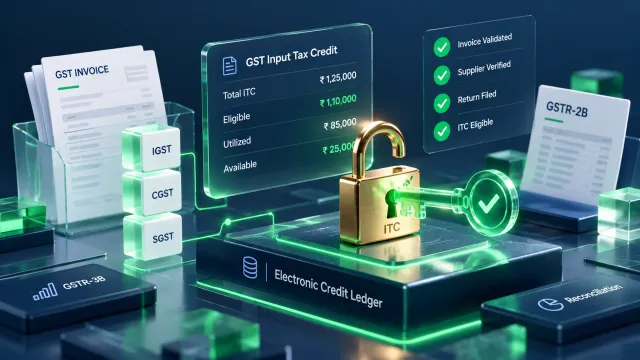
Why is My Gst Credit Blocked? Common Reasons and Solutions
Understand why GST credit is blocked, how to check GSTR-2B and Section 16 conditions, and when Rule 37A, Section 17(5)…

Best Gst Consultant in Jaipur
EasyTax Home Blog Our services Contact Home / Blog / GST / Best GST Consultant in Jaipur GST compliance · Jaipur,…
Latest from the blog

SEO Agent connection test (temporary)
This is a temporary test post. It checks the connection between the EasyTax website and the SEO Agent publishing tool,…
Tax-Smart Tips for Salaried Employees: New Tax Regime
Tax-smart tips for salaried employees under the new tax regime: understand deductions, employer NPS, tax rebates,…
Tax-Smart Tips for Salaried Employees | EasyTax
Tax-smart tips for salaried employees under India’s new tax regime: compare deductions, employer NPS, rebates and…
EasyTax • Trusted by 10,000+ Clients
GST Return Filing & Compliance
Timely GSTR-1 & GSTR-3B filing, 100% ITC matching and department notice defense by certified GST experts.