

NPS Benefits in India: Tax Benefits & Investment Guide

Last updated: 23 November 2026
NPS benefits in India go beyond retirement savings. The National Pension System (NPS) gives eligible individuals a structured way to build a retirement corpus through regular contributions and market-linked investments. It may also offer tax benefits, subject to the applicable income-tax provisions and the taxpayer's chosen tax regime.
In this guide, we explain how NPS works, its major benefits, contribution rules, tax treatment, investment choices and withdrawal conditions. We also discuss how NPS compares with other retirement savings options in India.
What is the National Pension System (NPS)?
The National Pension System is a voluntary, defined-contribution retirement savings scheme regulated by the Pension Fund Regulatory and Development Authority (PFRDA). It allows eligible individuals to contribute towards a pension account during their working years and build savings for retirement.
Unlike a traditional deposit that offers a predetermined interest rate, NPS investments are market-linked. Contributions are invested through permitted pension funds and allocated across different asset classes according to the subscriber's investment choice. Consequently, the final value of an NPS account depends on contributions, investment allocation, market performance, charges and the period of investment.
NPS is intended primarily for long-term retirement planning. At the time of an eligible exit, the subscriber can receive a permitted lump-sum amount and may need to use a portion of the accumulated pension wealth to purchase an annuity. The applicable options depend on the subscriber category, exit circumstances and prevailing PFRDA regulations.
For the official scheme overview, visit the PFRDA website and review the information applicable to your subscriber category.
Major benefits of the National Pension System
01 Helps build a retirement corpus
One of the main NPS benefits is that it encourages individuals to save regularly for retirement. Contributions made over an extended period can accumulate through investment growth and compounding. Starting early may provide more time for investments to grow, although actual returns are not guaranteed.
For salaried employees, self-employed professionals and other eligible individuals, a dedicated pension account can help make retirement savings a planned part of their financial routine.
02 Offers different investment choices
NPS provides investment exposure to permitted asset classes such as equity, corporate debt and government securities. Subscribers can select an allocation according to the available scheme options and their risk tolerance.
Equity investments may offer growth potential over long periods but can fluctuate significantly. Debt and government securities have different risk and return characteristics. The choice of allocation should therefore reflect the subscriber's age, financial goals and ability to tolerate market movements.
03 Provides portability across employment
NPS accounts are designed to remain portable when subscribers change employers or locations. The Permanent Retirement Account Number (PRAN) identifies the subscriber's pension account. This can make it easier to continue retirement savings when moving between jobs, subject to the procedures applicable to the subscriber's sector and account.
04 Operates under PFRDA regulation
NPS operates within a regulatory framework administered by PFRDA. The framework covers pension funds, intermediaries, account administration and subscriber-related processes. This provides a formal regulatory structure for the scheme, although it does not eliminate investment risk or guarantee a particular return.
05 May provide income-tax deductions
Eligible NPS contributions may qualify for income-tax deductions. The available benefit depends on the relevant tax year, the nature of the contribution, the taxpayer's employment category and the tax regime selected.
Since India's income-tax law changed from 1 April 2026, it is important to distinguish contributions made under the earlier Income-tax Act, 1961 from contributions governed by the Income-tax Act, 2025. The tax treatment is explained separately in the section on NPS tax benefits.
06 Can support retirement income through an annuity
Depending on the applicable exit rules, a subscriber may need to use a portion of the accumulated pension wealth to purchase an annuity. An annuity is a financial product that can provide periodic payments according to its terms.
The amount of pension income depends on the purchase amount, annuity option, provider and rates available when the annuity is purchased. NPS does not guarantee a particular monthly pension amount.
07 Encourages disciplined long-term investing
Regular contributions can help individuals develop a consistent retirement savings habit. Instead of relying entirely on last-minute investments, subscribers can build their retirement corpus over their working years. However, contributions should be planned alongside emergency savings, insurance needs, debt obligations and other financial goals.
Who can invest in NPS in India?
Under the All Citizen Model, eligible Indian citizens, including resident and non-resident Indians, and eligible Overseas Citizens of India may subscribe subject to the current scheme conditions. The current PFRDA All Citizen Model information provides an eligible age range of 18 to 85 years, subject to the applicable requirements.
NPS may be relevant to salaried employees, self-employed individuals and professionals who want to build retirement savings. Government employees and corporate subscribers may be covered by different NPS arrangements, so their applicable rules should be checked separately.
Eligibility, documentation and account-opening requirements can change. Applicants should verify the latest conditions through PFRDA or an authorised NPS service provider before registering.
Understanding NPS Tier I and Tier II accounts
NPS offers two main types of accounts: Tier I and Tier II. Although both are associated with the NPS framework, they serve different purposes and have different withdrawal and tax characteristics.
What is an NPS Tier I account?
Tier I is the primary pension account under NPS. It is designed for long-term retirement savings and is subject to specific withdrawal and exit conditions. Eligible contributions may qualify for tax deductions under the applicable income-tax law, subject to the taxpayer's tax regime and statutory limits.
Because withdrawals are regulated, subscribers should consider their retirement horizon and liquidity requirements before contributing. Tier I is generally more suitable for money that can remain invested for the intended long-term purpose.
What is an NPS Tier II account?
Tier II is an optional investment account linked to an eligible Tier I account. It generally offers more flexible withdrawals than Tier I. However, it does not ordinarily provide the same tax benefits as the primary pension account.
Special provisions may apply to particular subscriber categories. Before opening or contributing to Tier II, check the current eligibility and tax rules for your account.
| Feature | Tier I | Tier II |
|---|---|---|
| Main purpose | Retirement savings | Optional investment account |
| Withdrawals | Subject to NPS withdrawal and exit rules | Generally more flexible |
| Tax benefits | May qualify subject to applicable law | Generally does not offer the same deductions |
| Investment purpose | Long-term pension planning | Optional investment savings |
NPS tax benefits in India: Rules for 2026
NPS tax deductions depend on the year in which the contribution is made. The Income-tax Act, 2025 applies from 1 April 2026 for Tax Year 2026–27 onwards. Therefore, taxpayers should not use the old section numbers for a contribution made in the new tax year without checking the applicable provisions.
NPS tax deductions for FY 2025–26
For contributions made during FY 2025–26, the relevant provisions are sections 80CCD(1), 80CCD(1B) and 80CCD(2) of the Income-tax Act, 1961. The deductions are subject to statutory limits and the taxpayer's eligibility.
Section 80CCD(1): Eligible individual contributions may qualify for a deduction subject to the applicable percentage-of-salary limit for salaried individuals or gross-total-income limit for self-employed individuals. The deduction is included within the overall limit shared with sections 80C and 80CCC.
Section 80CCD(1B): An additional deduction of up to ₹50,000 may be available for eligible individual NPS contributions, subject to the conditions of the provision. The same contribution cannot be claimed twice.
Section 80CCD(2): Eligible employer contributions may qualify for a separate deduction. The permitted percentage depends on the employer category and the tax regime applicable to the employee.
These provisions should not be treated as universally available under every tax regime. In particular, deductions for an individual's own contributions and deductions for employer contributions have different rules. Refer to the Income Tax Department's official portal for the applicable assessment-year guidance.
NPS tax treatment for Tax Year 2026–27 onwards
For Tax Year 2026–27 onwards, section 124 of the Income-tax Act, 2025 deals with deductions for eligible contributions to a notified pension scheme.
Section 124(1) provides for a deduction for qualifying employer contributions, subject to the statutory percentage limits. The general limits include 14% of salary for Central or State Government employers and 10% for other employers, subject to the conditions in the Act.
Section 124(2) provides a specific adjustment for qualifying employer contributions where income is computed under the new tax regime in section 202(1). The applicable limit for other employers is substituted with 14%, subject to the statutory conditions.
Section 124(3) addresses eligible individual contributions and provides a deduction subject to a maximum of ₹50,000 and the conditions of the provision. However, the interaction with section 202 must be considered before claiming this deduction under the new tax regime. Do not assume that an individual contribution automatically qualifies under the default regime.
For a claim, verify the current amended statutory text and the applicable tax regime rather than relying on an older article or an earlier year's deduction limit. The official law is available through the Income Tax Department.
Are NPS withdrawals tax-free?
The amount that PFRDA permits a subscriber to withdraw is not automatically tax-free. PFRDA regulations determine the permitted exit and withdrawal options, while income-tax legislation separately determines the tax treatment of the amount received.
For an exit governed by the earlier Income-tax Act, the applicable provisions concerning NPS contributions, partial withdrawals, closure and annuity payments must be considered. For Tax Year 2026–27 onwards, the relevant provisions of the Income-tax Act, 2025 must be checked instead of simply carrying forward the old section references.
Annuity payments may have separate tax consequences. Before making a withdrawal or purchasing an annuity, consider the applicable tax year and seek professional advice if the amount is significant.
NPS investment options: Active Choice and Auto Choice
NPS subscribers can select an investment approach based on their financial goals, age and comfort with market risk. The available choices and allocation limits depend on the applicable NPS model and current PFRDA rules.
Active Choice
Under Active Choice, the subscriber selects the allocation among permitted asset classes. These can include equity, corporate debt and government securities. Each asset class has a different risk and return profile, and the subscriber is responsible for choosing an allocation within the applicable limits.
Equity exposure can provide market-linked growth potential but also involves greater price fluctuations. Debt investments have interest-rate and credit risks, while government securities can also fluctuate in value when market interest rates change.
Auto Choice
Auto Choice follows a life-cycle approach. The allocation between asset classes changes according to the selected option and the subscriber's age. The approach is designed to adjust the investment mix over time, but it does not guarantee returns or remove market risk.
Subscribers should review the available investment choices and current allocation rules on the official PFRDA website before selecting an option.
How to open an NPS account in India
Eligible individuals can open an NPS account through an authorised Point of Presence or an available online registration channel. The process may differ depending on the subscriber category, account type and service provider.
01 Check eligibility and select the account type
First, confirm that you meet the eligibility and KYC requirements for the NPS model you intend to join. Decide whether you are registering under the All Citizen Model, a corporate arrangement or another applicable category.
02 Keep your KYC documents ready
Applicants may be asked to provide identity and address proof, PAN details, a photograph, bank-account information and other documents required for their category. NRI and OCI applicants may have additional documentation requirements. Always use the current document checklist supplied by the authorised registration channel.
03 Complete the registration process
Enter your personal details, contact information, nominee details and other required information through the authorised online portal or Point of Presence. Review the details carefully before submitting the application to avoid errors in the pension account.
04 Make the initial contribution
After completing the required registration steps, make the initial contribution through an available payment method. Minimum contribution requirements and payment conditions should be checked with the current service provider.
05 Keep your PRAN and account records safe
After successful registration, retain your Permanent Retirement Account Number, acknowledgement and account information. Use the authorised account services to monitor contributions, update personal details and review your investment allocation.
NPS withdrawal and exit rules in 2026
NPS withdrawal rules depend on the subscriber's category, account model, age, period of subscription, accumulated pension wealth and reason for exit. The following explanation focuses on the All Citizen Model. Government-sector and other subscriber categories may have different rules.
Normal exit under the All Citizen Model
Under the current All Citizen Model framework, normal exit is generally linked to completion of 15 years of subscription or attainment of 60 years of age, whichever is earlier. The available lump-sum and annuity options depend on the accumulated pension wealth.
| Accumulated pension wealth | General normal-exit options under the All Citizen Model |
|---|---|
| Up to ₹8 lakh | Specified options can permit withdrawal of the full amount as a lump sum or an alternative lump-sum and annuity arrangement. |
| Above ₹8 lakh and up to ₹12 lakh | Specified options include a lump sum of up to ₹6 lakh with the balance handled through permitted systematic withdrawal or annuity arrangements, or an alternative 80% lump-sum and 20% minimum-annuity option. |
| Above ₹12 lakh | Generally, up to 80% may be taken as a lump sum, with at least 20% used to purchase an annuity. |
These options are specific to the All Citizen Model and the current exit framework. They should not be applied automatically to every NPS subscriber. Check the current PFRDA regulations and your account's applicable exit category before submitting a withdrawal request.
Premature exit from NPS
Premature exit has separate eligibility conditions and settlement requirements. Under the All Citizen Model, the general framework requires a substantial portion of the accumulated pension wealth to be used to purchase an annuity, although specified small-corpus exceptions and other conditions may apply.
The amount available as a lump sum and the amount required for an annuity depend on the applicable regulation and subscriber circumstances. A subscriber should review the current exit provisions before deciding to leave NPS early.
Partial withdrawal from NPS
Partial withdrawal from Tier I is permitted only for specified purposes and subject to conditions. Under the current All Citizen Model guidance, the first partial withdrawal is generally available after three years of subscription. The permitted withdrawal is up to 25% of the subscriber's own contributions, excluding investment returns.
Before age 60, the rules generally permit up to four partial withdrawals, subject to a minimum four-year interval. After age 60, withdrawals may be available more frequently, subject to the prescribed interval and other requirements. The subscriber must meet the applicable purpose and documentation conditions.
Not every personal expense qualifies. Check the latest PFRDA guidance for the permitted purposes, supporting documents and conditions before applying.
Withdrawal in the event of death
Death-related settlement is governed by separate NPS provisions. The available settlement options depend on the subscriber category, nominee details and current regulations. Nominees or legal heirs should follow the claim process issued by the relevant NPS intermediary and provide the required documents.
For detailed exit conditions, consult the PFRDA website and its current Exit and Withdrawal Regulations and All Citizen Model FAQs.
Risks and limitations of investing in NPS
Although NPS can support long-term retirement planning, it is important to understand its limitations before investing. NPS is market-linked, so the value of the pension account can rise or fall depending on the underlying investments. Past performance does not guarantee future returns.
Tier I also has regulated withdrawal conditions. This means that the money may not be available as freely as savings held in a normal bank account or a flexible investment product. Subscribers should therefore avoid investing money that they may need for immediate expenses.
Annuity income is another factor to consider. The amount of periodic income depends on the annuity product, purchase amount, provider and rates available when the annuity is bought. Inflation can also reduce the purchasing power of retirement income over time.
Finally, tax deductions and withdrawal exemptions depend on the law applicable to the relevant tax year. A contribution should not be made solely to claim a deduction without considering the long-term investment and liquidity implications.
NPS vs PPF vs fixed deposits: Which is different?
NPS, Public Provident Fund (PPF) and fixed deposits can all play a role in financial planning, but they are designed differently. Their returns, risks, liquidity and tax treatment should be compared before choosing an option.
| Feature | NPS | PPF | Fixed Deposit |
|---|---|---|---|
| Primary purpose | Long-term retirement savings | Long-term savings | Deposit-based savings |
| Return structure | Market-linked | Government-notified interest rate | Rate offered by the bank or institution |
| Investment risk | Depends on asset allocation and market performance | Not market-linked; subject to scheme rules | Depends on institution and deposit terms |
| Liquidity | Tier I withdrawals are restricted by NPS rules | Subject to PPF lock-in and withdrawal conditions | Premature withdrawal may be available under product terms |
| Tax treatment | Depends on contribution type, tax regime and exit provisions | Depends on prevailing PPF and income-tax rules | Interest is generally taxable, subject to applicable provisions |
There is no single option that is best for every investor. NPS may suit individuals planning for retirement who understand market-linked investment risk and withdrawal conditions. PPF and fixed deposits may serve different savings and liquidity needs. Your decision should reflect your time horizon, risk tolerance, financial goals and tax position.
Calculate your potential NPS retirement corpus
An NPS calculator can help estimate how regular contributions and an assumed rate of return may affect the value of a retirement corpus over time. It can also help you compare different contribution amounts and investment periods.
Try the EasyTax NPS calculator to explore different retirement savings scenarios.
Remember that calculator results are illustrations, not guaranteed outcomes. Actual results can differ because of investment performance, contribution changes, applicable charges, annuity allocation and other factors. Check the assumptions used by the calculator before relying on its projection.
Frequently asked questions about NPS
01 Is NPS a safe investment?
NPS is regulated by PFRDA, but it is not a guaranteed-return investment. Its value depends on the performance of the selected investments. Subscribers should understand market risk, withdrawal restrictions and annuity conditions before investing.
02 What are the main benefits of NPS?
The main NPS benefits include structured retirement savings, investment choices across permitted asset classes, portability, regulatory oversight and potential tax deductions for eligible contributions. The actual benefits depend on the subscriber's circumstances and the rules applicable to the relevant year.
03 Can I withdraw money from NPS before retirement?
Partial withdrawals may be allowed from Tier I for specified purposes after meeting the minimum subscription period and other conditions. Premature exit is a separate process and is subject to different requirements.
04 Can NRIs open an NPS account?
Eligible non-resident Indians can subscribe under the applicable NPS conditions. KYC, identity, address and bank-account requirements may differ from those for resident subscribers. Applicants should verify current eligibility with PFRDA or an authorised service provider.
05 What is the difference between NPS Tier I and Tier II?
Tier I is the primary retirement pension account and has regulated withdrawal conditions. Tier II is an optional investment account with generally more flexible withdrawals and different tax treatment.
06 Does NPS provide guaranteed returns?
No. NPS returns are market-linked and depend on the selected asset allocation and investment performance. A subscriber should not treat an illustrative calculator projection or past performance as a guaranteed return.
07 Is the entire NPS corpus paid as a lump sum at retirement?
Not necessarily. The permitted lump-sum and annuity portions depend on the subscriber category, exit type, accumulated pension wealth and applicable PFRDA regulations. Certain corpus thresholds may provide additional exit options under the All Citizen Model.
08 Can I claim an NPS tax deduction under the new tax regime?
For Tax Year 2026–27 onwards, the Income-tax Act, 2025 provides specific treatment for eligible employer contributions and individual contributions. The availability of a deduction depends on the relevant provision and tax regime. Check sections 124 and 202 before making a claim.
09 Are NPS withdrawals completely tax-free?
Not every NPS receipt should automatically be treated as tax-free. Tax treatment depends on the applicable tax law, type of withdrawal, exit circumstances and annuity arrangements. Check the provisions applicable to the year in which the amount is received.
10 Where can I check the latest NPS rules?
The PFRDA website is the primary source for NPS regulations, exit conditions and subscriber guidance. For tax deductions and tax treatment, refer to the official Income Tax Department website and the applicable income-tax legislation.
Need professional help with NPS tax planning?
NPS decisions can affect retirement savings, employer contributions, tax deductions and the treatment of future withdrawals. The right approach depends on your income, employment category, tax regime, existing investments and retirement goals.
If you need help reviewing your tax position, explore EasyTax tax-planning services. You can also learn about expert-assisted income tax return filing or browse our complete range of EasyTax professional services.
Was this guide helpful?
Related reading

Crypto Tax Filing Mistakes in India (2026 Guide)
Crypto Tax Guide for India | Tax Year 2026–27 Crypto tax filing can become complicated when you trade frequently, use…
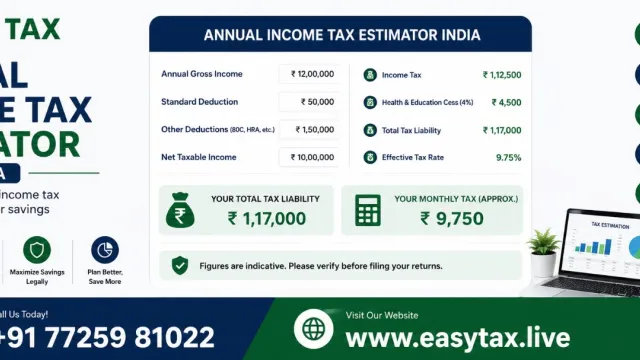
Annual Income Tax Estimator India: AY 2026–27 Guide
Income Tax Guide Annual Income Tax Estimator India: Calculate Your Tax for AY 2026–27 An annual income tax estimator…

Apply for PAN Card Online in 2026: Step-by-Step Guide
How to Apply for PAN Card Online in 2026: Step-by-Step Guide If you need a new Permanent Account Number (PAN), you can…
Latest from the blog

SEO Agent connection test (temporary)
This is a temporary test post. It checks the connection between the EasyTax website and the SEO Agent publishing tool,…
Tax-Smart Tips for Salaried Employees: New Tax Regime
Tax-smart tips for salaried employees under the new tax regime: understand deductions, employer NPS, tax rebates,…
Tax-Smart Tips for Salaried Employees | EasyTax
Tax-smart tips for salaried employees under India’s new tax regime: compare deductions, employer NPS, rebates and…
EasyTax • Trusted by 10,000+ Clients
ITR Filing for Investors & Traders
Multi-broker P&L computation, tax-loss harvesting, F&O balance sheets & capital gains optimization by expert CAs.