
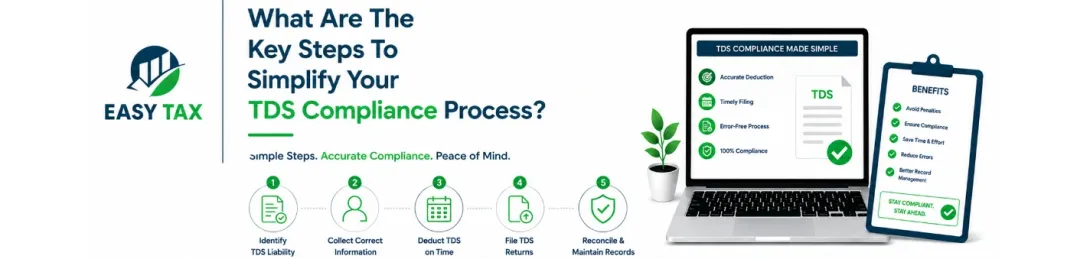
What Are The Key Steps To Simplify Your TDS Compliance Process?
How can TDS Filing Software simplify your tax compliance process? Tax Deducted at Source (TDS) is a fundamental component of the Indian taxation system. It ensures that tax is collected at the very source of income—whether it's salary, contractor payments, rent, professional fees, or other specified transactions. Businesses and deductors bear the crucial responsibility of deducting tax, depositing it with the government. And filing accurate returns on time.
However, managing TDS compliance is not always a straightforward task. It involves juggling multiple return forms, strictly adhering to deadlines, staying updated with continuous regulatory changes. And executing detailed reconciliation processes. Even a minor oversight can lead to severe penalties, interest charges, or compliance notices from the income tax department.
This is precisely why many modern businesses rely on automated TDS filing software to manage their tax obligations efficiently. These digital tools reduce manual effort, improve accuracy. And ensure seamless compliance with income tax rules. In this comprehensive guide, we will explore how TDS filing software works, why it is essential. And how it simplifies the entire tax compliance process for businesses.
What Is TDS Compliance?
TDS compliance refers to the end-to-end process of managing tax deducted at source obligations. This structured procedure includes:
Essential Aspects of Simplify TDS Compliance
- Deducting TDS on eligible payments at accurate rates.
- Depositing the deducted tax with the government within stipulated timeframes.
- Filing quarterly TDS returns without errors.
- Issuing TDS certificates, such as Form 16 and Form 16A, to deductees.
- Maintaining comprehensive records and reconciling transactions.
Businesses must adhere strictly to the TDS provisions laid out under the Income Tax Act for various payment types, including salaries, contractor fees, rent, professional charges. And interest. Failure to comply with these regulations can trigger hefty penalties, interest. And severe scrutiny from tax authorities.
Challenges in Manual TDS Compliance
Many businesses still attempt to manage TDS using outdated manual systems or basic spreadsheets. This approach is highly susceptible to inefficiencies and critical errors.
1. Manual Data Entry Errors
One of the most significant challenges is erroneous data entry. When dealing with high transaction volumes, businesses frequently encounter issues such as:
- Incorrect PAN (Permanent Account Number) inputs.
- Wrong TDS deduction amounts or incorrect rates applied.
- Duplicate entries causing reconciliation mismatches.
- Missing vendor details leading to incomplete returns.
Even minor typographical mistakes can result in the rejection of filed TDS returns.
2. Complex Return Forms
TDS returns must be filed using specific forms depending on the nature of the payment. Key forms include:
- Form 24Q: For salary payments.
- Form 26Q: For domestic non-salary payments.
- Form 27Q: For payments made to non-residents.
- Form 27EQ: For Tax Collected at Source (TCS).
Each form has a unique structure and distinct mandatory requirements, making manual preparation an arduous and time-consuming process.
3. Strict Filing Deadlines
TDS returns must be filed on a quarterly basis within strict, government-mandated due dates. Missing these deadlines can lead to:
Essential Aspects of Simplify TDS Compliance
- Late filing fees under Section 234E of the Income Tax Act.
- Accrued interest on delayed tax payments.
- Demand notices and scrutiny from the Income Tax department.
4. Challan and Deduction Mismatch
Matching TDS deductions with actual tax deposits is often complex. Mismatches between the challans generated and the returns filed can lead to significant compliance bottlenecks and processing delays.
5. Frequent Regulatory Changes
TDS rules, applicable rates. And reporting requirements are regularly updated by the government. Businesses often struggle to track and implement these regulatory updates manually, increasing the risk of non-compliance.
What Is TDS Filing Software?
TDS filing software is an advanced digital solution explicitly designed to automate and simplify the comprehensive TDS compliance lifecycle. It empowers businesses by handling:
- Automated TDS calculation based on the latest tax slabs.
- Seamless data entry automation through ERP and spreadsheet integrations.
- Efficient preparation of TDS return forms.
- Instant challan reconciliation.
- Comprehensive report generation.
- Direct online filing of returns to the TRACES portal.
How TDS Filing Software Simplifies Compliance
1. Automated Data Entry
TDS software automatically imports critical financial data directly from accounting systems. This seamless integration eliminates the need for manual data entry, thereby drastically reducing human errors. It enables faster processing of large datasets and prevents data duplication.
2. Accurate TDS Calculation
The software automatically applies the correct TDS rates based on the nature of the transaction and the relevant sections of the Income Tax Act. This ensures correct deduction amounts, compliance with updated tax rules. And eliminates the risks associated with under-deduction or over-deduction.
Essential Aspects of Simplify TDS Compliance
3. Built-In Validation Checks
Before submitting returns, advanced TDS software performs rigorous validation checks to identify anomalies, such as invalid PAN numbers, missing mandatory fields, incorrect tax rates, or deduction mismatches. This proactive approach significantly minimizes the likelihood of return rejection.
4. Simplified Return Filing
TDS software seamlessly generates and prepares quarterly returns—including Forms 24Q, 26Q, 27Q. And 27EQ—in the exact format mandated by the government, ensuring a structured and error-free filing experience.
5. Automated Challan Reconciliation
Reconciling deductions with tax deposits is notoriously challenging. TDS software simplifies this by automatically matching deductions against challans, instantly identifying discrepancies. And generating clear reconciliation reports.
6. Real-Time Compliance Monitoring
Modern tax compliance tools offer real-time tracking dashboards that monitor filing status, highlight upcoming due dates, track pending actions. And issue timely compliance alerts to prevent missed deadlines.
7. Seamless Updates for Tax Rules and Rates
As TDS regulations frequently evolve, software solutions dynamically update their internal tax logic to reflect the latest rates and compliance rules, ensuring accurate returns every time.
8. Detailed Reporting and Analytics
TDS software generates highly detailed reports, including deductor-wise summaries, comprehensive employee/vendor statements, tax payment histories. And filing acknowledgements. These reports are invaluable during financial audits and internal assessments.
Essential Aspects of Simplify TDS Compliance
Benefits of Using TDS Filing Software
- Saves Time: Automation eliminates tedious manual labor, enabling faster compliance execution.
- Reduces Errors: Built-in validations and logic-driven calculations minimize human mistakes.
- Ensures Timely Compliance: Alerts and trackers guarantee deadlines are consistently met.
- Cost Efficiency: Avoiding late fees and penalties translates into direct operational cost savings.
- Better Data Management: Secure, digital record-keeping streamlines future audits and data retrieval.
- High Scalability: The software easily adapts whether a business processes a dozen or thousands of transactions.
Why Professional Support Matters
While software robustly simplifies operations, pairing it with professional tax expertise ensures accurate interpretation of nuanced tax laws, strategic handling of complex transactions. And effective resolution of compliance notices.
How EasyTax Helps with TDS Compliance
EasyTax provides end-to-end, optimized TDS compliance solutions tailored for businesses of all sizes. Our robust offerings include streamlined return filing services, automated compliance support, seamless challan reconciliation. And expert tax advisory services. Our core mission is to minimize your compliance burden and guarantee accurate, timely filings.
Frequently Asked Questions
What is TDS filing software used for?
It is specialized software designed to automate TDS calculations, facilitate return filing, perform reconciliation. And oversee comprehensive tax compliance management.
Is TDS software useful for small businesses?
Absolutely. It empowers small businesses by drastically reducing manual workload, enhancing accuracy. And ensuring timely adherence to tax regulations.
Can TDS software reduce penalties?
Yes. By virtually eliminating calculation errors and ensuring on-time filing, the software dramatically minimizes the risk of incurring late fees and penalties.
What are the main TDS return forms?
The primary forms utilized for TDS compliance are Form 24Q (salaries), Form 26Q (non-salaries), Form 27Q (non-resident payments). And Form 27EQ (TCS).
Conclusion
TDS compliance is a vital operational responsibility for any business operating in India. Managing it manually is inherently complex, incredibly time-consuming, and highly susceptible to errors. TDS filing software transforms this demanding process by automating intricate calculations, enhancing overall accuracy, diligently tracking deadlines. And executing flawless reconciliations.
Essential Aspects of Simplify TDS Compliance
By leveraging digital tools combined with expert support from EasyTax, businesses can achieve seamless, error-free TDS compliance. This strategic approach minimizes regulatory risks and frees up valuable resources, allowing business owners to focus on core growth and operational excellence rather than navigating tax complexities.
For more detailed assistance, explore our professional tax services or check official updates on the Income Tax Department website.
EasyTax • Jaipur
TDS Return Filing & Advisory
Quarterly TDS return preparation, 26AS reconciliation & error-free FVU generation with dedicated CA assistance.