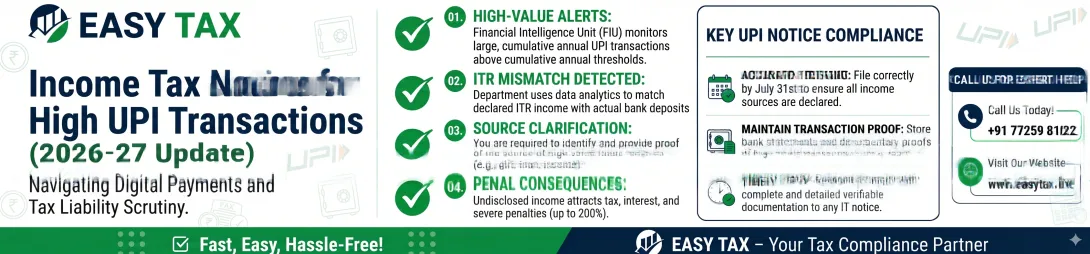
Income Tax Notice for High UPI Transactions
Essential Aspects of Tax
UPI has completely changed how Indians send and receive money. From tea stalls to freelancers, almost everyone now uses apps like Google Pay, PhonePe, Paytm. And BHIM for daily transactions. But recently, many people have started worrying about one thing: “Can I get an income tax notice because of high UPI transactions?” The short answer is — yes, in some cases. However, not every large UPI transaction is suspicious. The Income Tax Department mainly looks for transactions that do not match your income profile or tax filings. This guide explains when UPI transactions may attract scrutiny, what limits people should know. And how to stay safe legally. Yes. Financial transactions in India are increasingly tracked through digital systems. Banks and payment platforms maintain records of: The Income Tax Department may review this information if: This does not mean every UPI payment is checked manually. Most scrutiny happens through automated systems and data matching. Usually, normal personal transactions are not a problem. Issues may arise when there are: A person files an ITR showing annual income of ₹3 lakh. But their bank account receives: This mismatch may trigger scrutiny. The department may ask: There is no officially declared “safe limit” for UPI transactions. However, scrutiny risk generally increases when: The key factor is: Whether your transactions match your reported income. A salaried employee receiving occasional family transfers usually has no issue. But repeated commercial receipts without tax reporting can create problems. Yes. Freelancers, online sellers, consultants, traders. And creators often receive payments directly through UPI. Many people: This is where problems begin. If the department notices regular commercial activity without proper reporting, a notice may be issued. Usually, no. Money received from: is generally not taxable under income tax rules. However, problems can happen if: Keeping basic records is always a good idea for large transfers. Technically yes. But it is not recommended for growing businesses. Using a personal account for business payments creates: A separate current account helps: Do not panic. Many notices are simply requests for clarification. The department may ask: Ignoring notices is a major mistake. Responding properly and on time is important. Some people assume small online income is invisible. It is not. Frequent customer payments can indicate commercial activity. Splitting payments across accounts may still be traceable. Without invoices or records, explaining transactions becomes difficult. Some businesses receiving UPI payments may also require GST registration. You do not need to fear digital payments. You simply need proper compliance. Transparency reduces notice risk significantly. Neha is a freelance graphic designer in Pune. She receives: Initially, she used her personal savings account and never filed GST. Later, she received a compliance email asking for clarification on transactions. After consulting a tax professional: The issue was resolved without major penalties. UPI itself is not the problem. The real issue begins when: As digital payments grow in India, financial transparency is also increasing. If your UPI activity is genuine and properly reported, there is usually nothing to worry about. But if you receive large or frequent payments, especially for business or freelancing, it is smart to maintain proper tax compliance from the beginning. That can save you from: Yes. High-value or suspicious transactions that do not match your declared income may attract scrutiny. Banks and financial systems maintain transaction records that may be reviewed by tax authorities. There is no fixed limit. The key factor is whether transactions match your income profile and tax filings. They can, especially if business income is not properly disclosed. Usually no, if received from specified relatives under income tax rules. Received a notice for bank or UPI transactions? Get expert support from EasyTax.live before replying to the department. Professional guidance can help you avoid unnecessary penalties and respond correctly with proper documentation.Are UPI Transactions Monitored by the Income Tax Department?
What Kind of UPI Transactions Can Trigger an Income Tax Notice?
Essential Aspects of Tax Compliance
Example
Is There Any “Safe Limit” for UPI Transactions?
Do Freelancers and Small Businesses Face Higher Risk?
Common Examples
Can Family Transfers Through UPI Be Taxable?
Essential Aspects of Tax Compliance
Can Personal UPI Accounts Be Used for Business?
What Happens If You Receive an Income Tax Notice?
Common Mistakes That Trigger UPI-Related Tax Problems
1. Not Filing ITR
2. Hiding Business Income
3. Using Multiple Accounts
4. No Books or Records
5. Ignoring GST Rules
How to Stay Safe Legally
Good Practices Include:
Real-Life Example
Essential Aspects of Tax Compliance
Final Thoughts
FAQs
Can UPI transactions trigger income tax notices?
Is personal UPI monitored?
How much UPI transaction is safe?
Do freelancers get tax notices for UPI payments?
Are family transfers taxable?
Essential Aspects of Tax Compliance
Need Help With an Income Tax Notice?
For more detailed assistance, explore our professional tax services or check official updates on the Income Tax Department website.
EasyTax • Jaipur
Expert Assisted ITR Filing
Dedicated CA prepares, verifies, and files your ITR. Maximum refund, accurate deductions, zero notices.