
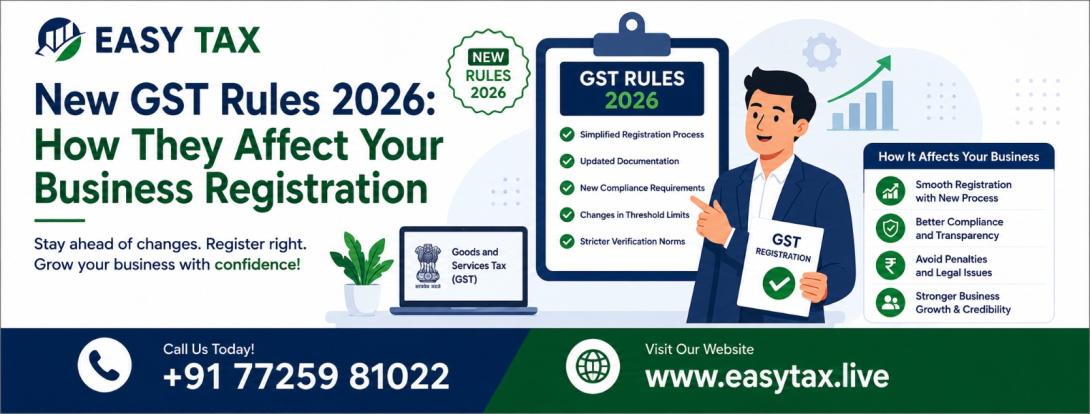
New GST Rules 2026: How They Affect Your Business Registration
Essential Aspects of Tax
How the New GST Rules 2026 Will Impact Your Business Registration
In the past few years, India’s taxation system has changed significantly after the implementation of GST. As businesses continue shifting toward digital operations, ecommerce platforms, online services. And organized compliance systems, the government is also regularly updating GST laws and registration procedures.
Several New GST Rules 2026 and compliance updates are expected to impact businesses, startups, freelancers, online sellers, and service providers across India. These changes aim to improve transparency, reduce fake registrations, strengthen tax compliance. And simplify digital tax administration.
Whether you are starting a new business, applying for GST registration, or already running a GST-registered company, understanding how the latest GST rules affect your business is extremely important in 2026.
This detailed guide explains the latest GST registration updates, compliance changes, startup impacts, ecommerce rules, and important GST developments businesses should know.
Why GST Rules Keep Changing
The government continuously updates GST regulations to make India’s tax system more efficient and digitally connected.
Main Goals Behind GST Updates
- Improve tax collection
- Reduce fake invoicing and fraud
- Increase digital compliance
- Simplify tax administration
- Improve online business tracking
- Ensure better visibility of transactions
As businesses become more digital, GST authorities are introducing stricter verification systems and smarter compliance monitoring tools.
Essential Aspects of Tax Compliance
This is why understanding GST Rules 2026 for Businesses has become essential for every business owner.
Overview of New GST Rules 2026
The New GST Registration Rules India 2026 mainly focus on:
- Stronger verification systems
- Aadhaar authentication
- Better invoice tracking
- Stricter compliance monitoring
- Ecommerce seller regulations
- Faster digital processing
- Fraud prevention measures
These changes affect businesses during:
- GST registration
- GST return filing
- Invoice generation
- Input Tax Credit (ITC) claims
- Business verification
Businesses ignoring these rules may face penalties, registration rejection, or compliance notices.
GST Registration Changes 2026
One of the biggest areas impacted by the latest GST updates is business registration.
Key GST Registration Changes 2026
Aadhaar Authentication Becomes More Important
Aadhaar verification is now becoming mandatory for many GST applicants.
This helps:
- Prevent fake registrations
- Improve verification speed
- Reduce fraud
- Enable faster approval
Businesses failing Aadhaar verification may face additional scrutiny.
Physical Verification in High-Risk Cases
GST officers may conduct physical verification for suspicious or incomplete applications.
This especially applies to:
- High-risk business categories
- Ecommerce sellers
- Shared office addresses
- Multiple registrations from one location
Proper documentation has become more important than ever.
Stricter Address Verification
Businesses must provide proper proof of business address.
Commonly accepted documents include:
- Electricity bill
- Rent agreement
- Property tax receipt
- NOC from owner
Incorrect address details may lead to registration rejection.
GST Registration Process 2026
The GST Registration Process 2026 remains mostly online. But verification standards are now stricter.
Step-by-Step GST Registration Process
Step 1: Visit GST Portal
Businesses must apply through the official GST portal.
Step 2: Submit PAN and Aadhaar Details
Correct PAN-linked information is extremely important.
Step 3: Upload Business Documents
Applicants must upload:
Essential Aspects of Tax Compliance
- PAN card
- Aadhaar card
- Business proof
- Bank proof
- Address proof
Step 4: Aadhaar OTP Verification
OTP verification helps speed up approval.
Step 5: ARN Generation
Applicants receive an ARN number for tracking application status.
Step 6: GST Approval
After successful verification, GSTIN is issued.
Understanding the Latest GST Registration Guidelines helps businesses avoid rejection and delays.
GST Rules 2026 for Small Businesses
The Latest GST Rules for Small Businesses are especially important because small businesses often struggle with compliance requirements.
Major Impact on Small Businesses
Better Compliance Monitoring
GST systems are becoming more automated.
Authorities can now track:
- Sales transactions
- GST returns
- Ecommerce activity
- Bank transactions
Even small businesses must now maintain proper financial records.
Increased Importance of Digital Accounting
Manual bookkeeping is becoming risky.
Businesses should now use:
- GST-compatible software
- Digital invoicing systems
- Online accounting tools
This improves overall GST compliance.
Timely Return Filing
Late GST returns may create:
- Penalties
- ITC blockage
- Compliance notices
Small businesses must maintain proper filing discipline in 2026.
GST Registration for Startups India 2026
India’s startup ecosystem is growing rapidly, and GST registration has become an important part of business setup.
How New GST Rules Affect Startups
Faster Verification for Genuine Businesses
Startups with proper documentation can now get faster approvals.
Better Compliance Tracking
Authorities closely monitor:
- Startup invoices
- Funding transactions
- Ecommerce sales
- Interstate supplies
Mandatory GST for Many Online Businesses
Startups selling through:
- Amazon
- Flipkart
- Meesho
- Shopify
often require compulsory GST registration regardless of turnover.
GST Rule Changes for Online Businesses
One of the biggest areas affected by New GST Law Changes India is ecommerce and online businesses.
Essential Aspects of Tax Compliance
Ecommerce Platforms Share Seller Data
GST authorities now receive detailed seller information directly from marketplaces.
Invoice Matching is Becoming Automated
Fake or mismatched invoices are easier to detect.
TCS Compliance
Ecommerce sellers must properly understand Tax Collected at Source (TCS) rules.
Interstate Selling Rules
Many online businesses require GST registration regardless of turnover because of interstate sales.
This makes GST compliance extremely important for ecommerce sellers in 2026.
GST Compliance Rules 2026
Businesses must now focus not only on registration but also on long-term compliance.
Important GST Compliance Rules 2026
Accurate Invoice Generation
Invoices must contain:
- Correct GSTIN
- HSN/SAC codes
- Proper tax breakup
- Buyer details
Proper Record Maintenance
Businesses should maintain:
- Purchase records
- Sales records
- GST returns
- Expense documents
Timely GST Return Filing
Regular filing is necessary even for nil returns.
Correct ITC Claims
Fake or excess Input Tax Credit claims may trigger GST notices.
Common GST Mistakes Businesses Should Avoid
Many businesses face GST problems because of avoidable errors.
Common GST Mistakes in 2026
Incorrect Business Information
Wrong:
- PAN details
- Address proof
- Business type
- Mobile number
may delay GST registration.
Ignoring GST Notices
Businesses should never ignore notices issued by GST authorities.
Wrong Tax Invoices
Incorrect invoicing may create:
- ITC rejection
- Penalties
- Buyer disputes
Delayed Filing
Late filing affects compliance ratings and refund processing.
Understanding Business GST Registration Rules 2026 helps businesses avoid these problems.
Benefits of Proper GST Compliance
Although GST rules are becoming stricter, proper compliance offers several benefits.
Advantages of GST Compliance
Better Business Credibility
GST-compliant businesses appear more professional.
Easier Loan Approval
Banks prefer businesses with organized records.
Essential Aspects of Tax Compliance
Input Tax Credit Benefits
Businesses can legally reduce tax burden through ITC.
Smooth Ecommerce Operations
Marketplaces prefer GST-compliant sellers.
Reduced Legal Risk
Proper compliance minimizes penalties and notices.
Why Professional GST Support is Important
As GST systems become more technical, many businesses now prefer professional consultants.
Benefits of Professional GST Assistance
- Accurate GST registration
- Compliance management
- Return filing support
- Invoice guidance
- Notice handling
- Tax planning support
Professional experts help businesses understand the latest GST updates properly.
Online GST Registration India 2026
Digital systems have made Online GST Registration India 2026 much faster and more transparent.
Businesses can now:
- Apply online
- Upload documents digitally
- Track applications
- Download certificates
- File returns remotely
However, businesses must still ensure:
- Correct documentation
- Accurate information
- Proper compliance understanding
Digital convenience does not remove legal responsibility.
Future of GST Compliance in India
India is moving toward a more technology-driven taxation system.
Future GST systems may include:
- AI-based compliance tracking
- Automated invoice matching
- Real-time transaction monitoring
- Faster fraud detection
- Improved digital tax systems
Businesses must adapt to these changing regulations for long-term success.
Conclusion
The New GST Rules 2026 are significantly changing how businesses register, operate, and maintain tax compliance in India. From stricter Aadhaar verification and improved invoice tracking to tighter ecommerce regulations and digital compliance monitoring, businesses now need to be more careful than ever.
Whether you run a startup, small business, online store, consultancy, or growing company, understanding how the latest GST rules affect business registration is essential for avoiding penalties and ensuring smooth operations.
Essential Aspects of Tax Compliance
The latest GST updates are designed to improve transparency and reduce fraud. But they also increase the importance of proper documentation, timely filing. And accurate compliance.
By following the latest GST registration guidelines, maintaining proper records, and staying compliant with GST rules in 2026, businesses can avoid unnecessary legal problems and build a stronger foundation for future growth.
For more detailed assistance, explore our professional tax services or check official updates on the Income Tax Department website.
EasyTax • Jaipur
GST Return Filing & Compliance
Timely GSTR-1 & GSTR-3B filing, 100% ITC matching and department notice defense by certified GST experts.